
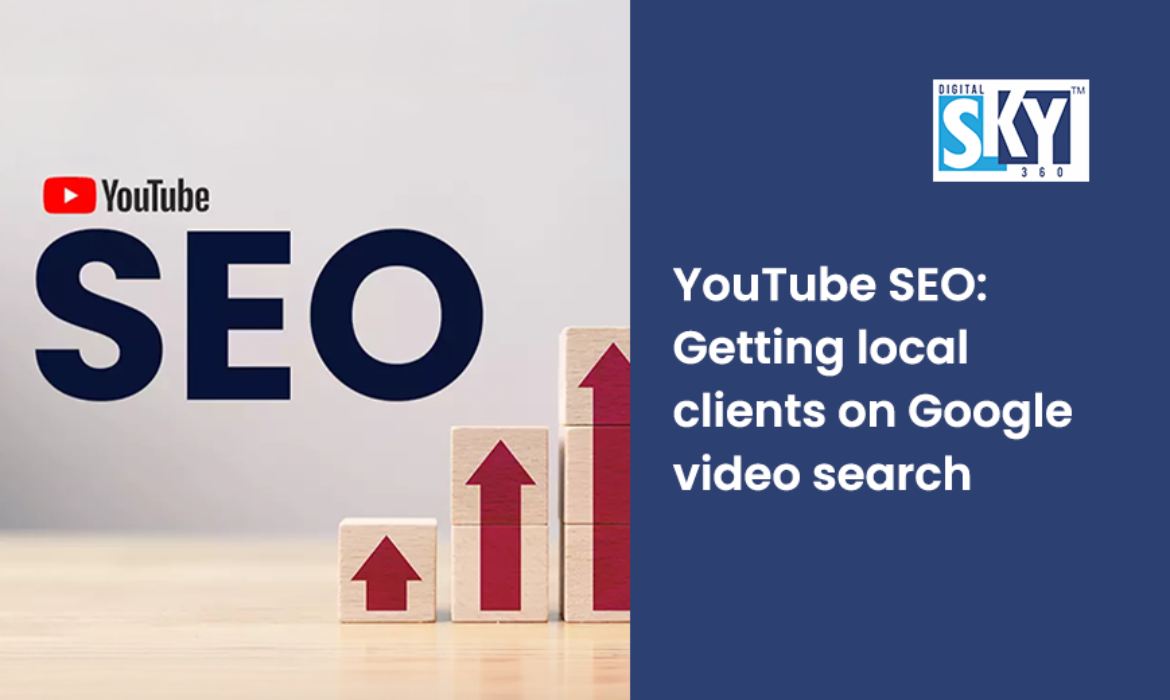
YouTube SEO: Getting Local Clients on Google Video Search
If you run a local business and you’re not showing up in Google’s video search results, you’re quietly handing customers to your competitors. Every day, thousands of people in your city type questions into Google — and Google answers many of them with a video carousel sitting right above the organic blue links. That carousel is your opportunity. And the businesses filling those spots understand one thing clearly: YouTube SEO is not optional for local growth anymore.
In this guide, we break down exactly how to use YouTube SEO to attract local clients through Google video search — in plain, practical language that works for a brick-and-mortar business, a local service provider, or a consultant trying to build a regional reputation.
Why Google Shows YouTube Videos in Local Search Results
Google owns YouTube. That relationship runs deeper than corporate ownership — it shapes how search results are built. When Google’s algorithm determines that a query has “video intent” — meaning the searcher would benefit most from watching rather than reading — it pulls YouTube content directly into the search results page.
Local searches trigger this behavior constantly. Queries like “best interior designer in Ahmedabad,” “how to fix a leaking tap,” or “affordable dental clinic near me” often return video results alongside maps and organic links. When your video appears in that mix, your business earns visibility in three different places on a single page: video carousel, local pack, and organic results. That’s rare, powerful real estate.
The businesses capturing that space are not necessarily the biggest brands. They’re the ones who understand how to structure, tag, and promote their videos with search intent in mind.
The Foundation: Building a YouTube Channel That Google Trusts
Before you optimize a single video, your channel itself needs to signal legitimacy. Think of your YouTube channel as a mini-website. It needs a complete profile, a keyword-rich description that mentions your city and service area, and consistent branding.
A well-thought-out YouTube channel strategy starts with clarity: Who are you, where do you operate, and what problems do you solve? These three answers should appear in your channel description, your about section, and your channel trailer. Google reads all of it.
Use your business name in the channel name exactly as it appears on Google Business Profile. This consistency helps Google connect your YouTube presence to your local entity — a critical trust signal for local video search ranking.
Keyword Research for Local YouTube SEO
General YouTube SEO advice tells you to target high-volume keywords. Local YouTube SEO tells you to target the right people in the right place. The difference is significant.
Start with how your customers actually search. A plumber in Ahmedabad doesn’t need to rank for “plumbing tips” globally — they need to rank for “emergency plumber Ahmedabad” or “water tank repair service Ahmedabad.” These longer, geographically specific phrases have lower competition and attract people who are ready to call.
Tools like Google Search Console, Google Trends, and YouTube’s own autocomplete are your best friends here. Type your service into YouTube’s search bar and watch what it suggests. Each suggestion is a real query people are searching for — and a potential video topic.
A good Local SEO strategy combines this geographic keyword research with structured video content that answers the specific questions your local audience is asking.
Optimizing Individual Videos for Google Video Search
Once you’ve identified your local keywords, every video needs to be built around them deliberately. This is where most local businesses miss the mark — they create good videos but skip the optimization layer that makes them discoverable.
Title: Your video title should front-load the primary keyword and include your city name. “Top 5 Reasons to Hire a Certified CA in Ahmedabad” is a far stronger title than “Why You Should Hire a Chartered Accountant.”
Description: Write a minimum of 200 words in your description. Include the keyword naturally in the first two sentences, mention your location at least twice, add your website URL and phone number, and use relevant hashtags at the end. Google indexes this text — treat it like on-page SEO copy.
Tags: Use a mix of broad topic tags, local tags (“Ahmedabad,” “Gujarat,” “India”), and long-tail tags matching your title keyword.
Transcript and Closed Captions: Upload a custom SRT file or let YouTube auto-generate captions — then edit them for accuracy. Google reads captions when crawling your video, which means more text signals tied to your keywords.
Thumbnail: A high-quality, branded thumbnail increases click-through rate, which directly signals to both YouTube and Google that your video satisfies searcher intent.
Connecting YouTube SEO to Your Overall Local Digital Presence
YouTube SEO doesn’t exist in a silo. Its power multiplies when it’s connected to the rest of your digital presence.
Embed your videos on relevant pages of your website. A roofing company should embed their “roof inspection process” video on their services page. This boosts average time-on-page, reduces bounce rate, and gives Google another context clue linking your video to your local business.
Link your YouTube channel from your Google Business Profile. Add video links in your GMB posts. These cross-signals tell Google’s local algorithm that your business is active, authoritative, and multimedia-rich — qualities that the current search landscape increasingly rewards.
As part of a broader plan, working with a digital marketing Agency in Ahmedabad that understands both video and local search can help coordinate these moving parts into a single cohesive strategy.
Voice Search and Video: The Intersection You Can’t Ignore
Here’s a trend most local businesses are underestimating: voice search and video search are converging. When someone asks their phone “who is the best web designer near me,” the device often surfaces a video result or reads a description from a video snippet.
Optimizing for Voice search SEO means writing video descriptions and titles in natural, conversational language that mirrors how real people speak. Think full sentences and questions: “What does a kitchen renovation cost in Ahmedabad?” rather than “kitchen renovation cost Ahmedabad.”
This approach satisfies both the AI-generated overview systems that Google deploys increasingly in search results and the traditional ranking signals that determine organic placement.
Social Signals and Video Distribution
Publishing a video and waiting is a passive strategy. Distributing it actively is what separates the businesses that grow from the ones that stagnate.
Share your videos on all active social media channels. Repurpose 60-second clips for Instagram Reels and Facebook Shorts. Use the full video in email newsletters. A social media marketing Agency in Ahmedabad can help you build a distribution system that gets your videos in front of local audiences consistently — which in turn drives the view counts and engagement metrics that improve your YouTube search ranking.
For businesses that want a more comprehensive approach, partnering with an seo company in Ahmedabad that integrates YouTube into their overall SEO workflow means your video content is treated as a ranking asset — not an afterthought.
Tracking What Works
Set up YouTube Analytics and monitor these metrics weekly: impressions, click-through rate, average view duration, and traffic source breakdown. When a video starts getting impressions from “YouTube search” or “Google search,” that’s the algorithm beginning to trust it. Double down on those topics.
Connect YouTube Analytics to Google Analytics to see whether video viewers are converting into website visitors, form submissions, or calls. Local businesses that track this data make smarter content decisions — and they scale what works.
Final Thoughts
YouTube SEO is one of the most underused growth levers available to local businesses today. While your competitors are fighting over the same blog posts and PPC keywords, a well-optimized video can rank in Google’s video carousel, appear in AI overviews, and surface in voice search results — all at the same time.
The businesses that start building this channel now, with consistency and local intent, will own that space for years. The ones who wait will spend more later trying to catch up.
Start with one video. Optimize it properly. Measure it. Then build the next one. That’s how local businesses win on Google video search — one well-placed, well-optimized video at a time.
FAQ – YouTube SEO
1: How does YouTube SEO help local businesses?
YouTube SEO helps local businesses rank videos in Google and YouTube search results, making it easier for nearby customers to discover services and contact the business.
2: Can YouTube videos appear in Google search results?
Yes, optimized YouTube videos can appear in Google Video Search and standard search results, especially when titles, descriptions, and keywords match user intent.
3: What are the best keywords for local YouTube SEO?
Use location-based keywords such as “best plumber in Ahmedabad” or “digital marketing agency near me” to target local search traffic effectively.
4: How long does it take for YouTube videos to rank on Google?
Ranking time varies based on competition, video optimization, watch time, engagement, and keyword difficulty. Some videos rank within days, while others may take weeks.
5: What should I include in a YouTube video description for local SEO?
Include local keywords, service details, city names, contact information, website links, timestamps, and a clear call-to-action to improve local visibility.
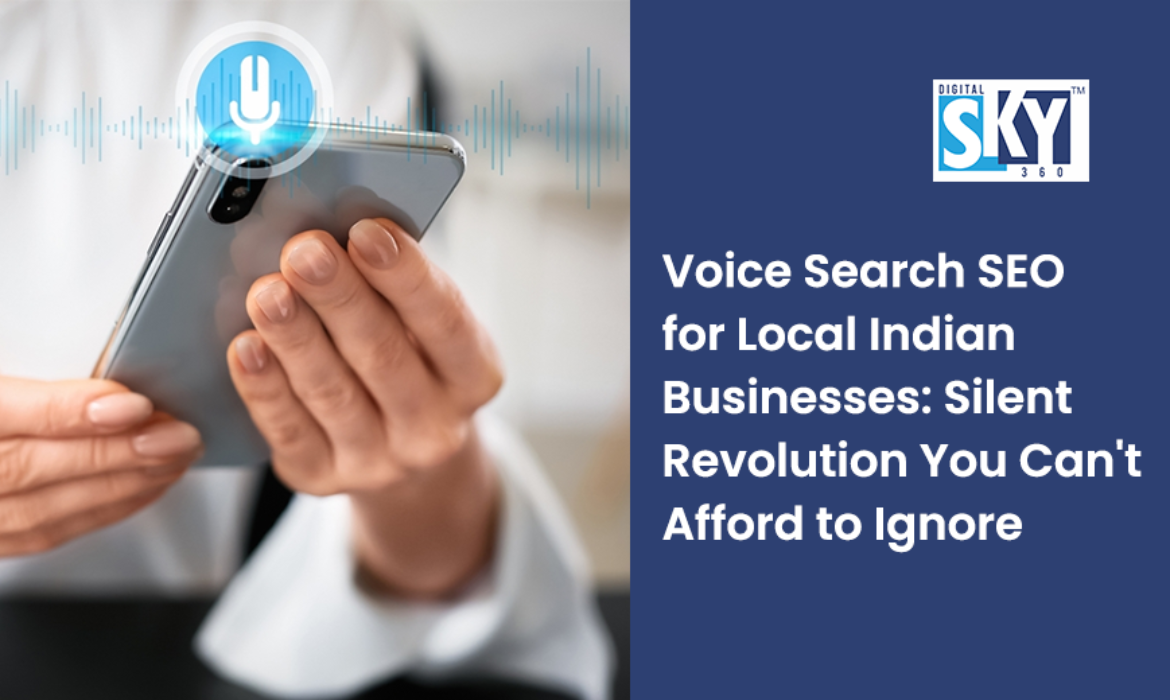
Voice Search SEO for Local Indian Businesses
There’s a moment happening right now in millions of Indian homes, auto-rickshaws, and kirana stores. Someone picks up their phone and says — not types — “meri pass best mithai ki dukaan kahan hai?” or “Ahmedabad ma best mobile repair shop kyaan chhe?”
And just like that, a business either shows up or disappears.
Voice search isn’t coming to India. It’s already here — and it’s speaking in Hindi, Gujarati, Tamil, and a dozen other languages that your current SEO strategy probably isn’t prepared for. If your business hasn’t adapted, you’re quietly losing customers to competitors who have.
Why Indian Voice Search Is Exploding Right Now
Let’s start with a number that should stop you in your tracks: Hindi and Gujarati voice queries are growing at 40% year-over-year. That’s not a trend — that’s a transformation.
The reasons aren’t complicated. Affordable smartphones flooded the market. JIO made data nearly free. And for millions of first-generation internet users across Tier 2 and Tier 3 cities, speaking to a phone is simply more natural than typing. Many users are more comfortable saying “nearest pharmacy open abhi” than carefully spelling it out on a keyboard.
Google’s own data consistently shows that “near me” searches in Indian regional languages have surpassed English equivalents in multiple states. For local businesses in Gujarat, Rajasthan, Maharashtra, and UP, this is not a niche phenomenon — this is your customer base.
How Voice Search Behaves Differently (And Why It Matters for SEO)
Here’s what most business owners get wrong: they treat voice search like typed search with a microphone. It’s not.
When someone types, they might search: “shoe shop Ahmedabad”
When someone speaks, they ask: “Which shoe shop near me is open on Sunday and has good ratings?”
Voice queries are longer, conversational, and deeply intent-driven. They almost always contain question words — who, what, where, when, how — and they’re almost always local. This changes everything about how you need to structure your content, your Google Business Profile, and your website.
For businesses targeting Local SEO in 2026, optimizing for voice means thinking like a customer mid-conversation, not like a keyword researcher.
The Anatomy of a Voice-Ready Local Business
So what does a business actually need to rank for voice queries? Here are the foundational pillars:
1. A Fully Optimized Google Business Profile (GBP)
This is non-negotiable. Voice assistants — Google Assistant, Siri, Alexa — pull answers directly from your GBP. Your business name, address, phone number, hours, and categories must be accurate, complete, and regularly updated.
Add photos every week. Respond to every review. Use the Q&A section to answer common spoken questions like “Do you offer home delivery?” or “Kya aap Sunday ko khule rehte hain?” These exact phrases can become voice search triggers.
2. FAQ-Style Content That Mirrors Natural Speech
Your website content needs to answer questions the way people actually ask them. Create a dedicated FAQ page or add question-and-answer sections throughout your site. Think in full sentences:
- “What is the best time to visit your store in Ahmedabad?”
- “How much does a website design cost in India?”
- “Where can I find affordable chartered accountant services near me?”
This kind of content is exactly what AI overviews and voice assistants pull from when constructing spoken answers.
3. Schema Markup — The Language Search Engines Love
Schema markup tells Google precisely what your business is, what it offers, and where it’s located. LocalBusiness schema, FAQ schema, and Review schema are the three most powerful for voice search. If your website doesn’t have these implemented, a competent SEO company in Ahmedabad can set them up quickly and dramatically improve your chances of appearing in spoken results.
E-E-A-T Signals and Voice Search — More Connected Than You Think
Google doesn’t just rank websites; it evaluates trustworthiness. In 2024 and beyond, E-E-A-T signals — Experience, Expertise, Authoritativeness, and Trustworthiness — have become critical ranking factors, especially for voice and AI-generated results.
What does this mean for a local business? It means:
- Your website should clearly show who you are — team photos, founder story, certifications
- Your content must demonstrate real knowledge, not fluff
- You should be mentioned on credible external sites — local directories, news portals, industry associations
- Your reviews across Google, Justdial, and IndiaMart should reflect genuine customer experience
When Google’s AI decides which business to recommend in a voice result, it’s not just checking keywords. It’s asking: “Can I trust this answer enough to speak it out loud to a user?” Strong E-E-A-T signals push you over that threshold.
Regional Language Optimization: Stop Ignoring Half Your Market
This is where most digital strategies in India have a glaring blind spot.
If your business serves Gujarati-speaking customers and your entire online presence is in English, you are invisible to a massive portion of your target audience during voice search. Google now understands and indexes regional language content with impressive accuracy.
Consider adding:
- A Gujarati or Hindi version of your key landing pages
- Regional language posts on Google Business Profile updates
- Multilingual FAQ content that mirrors how locals actually phrase questions
- Location pages for specific neighbourhoods or pin codes you serve
A forward-thinking digital marketing agency in Ahmedabad will help you build this regional layer into your SEO strategy — not as an afterthought, but as a core competitive advantage.
What Does This Actually Cost — And Is It Worth It?
A common question from business owners is around SEO cost in India. The honest answer: it varies widely based on competition, scope, and the agency’s expertise. Local SEO packages for small businesses can start anywhere from ₹8,000 to ₹25,000 per month, while more competitive industries or larger campaigns cost more.
But here’s the better question: what does not doing it cost you?
Every missed voice search result is a customer who found your competitor instead. As voice search volume continues climbing — especially among regional language users — the gap between optimized and unoptimized businesses will only widen.
How to Choose the Right SEO Partner for Voice Search
Understanding how to choose the best SEO company for this specific challenge is critical. Not all agencies understand regional language voice search, schema implementation, or AI overview optimization. Ask any agency you’re considering:
- Have you ranked clients for voice or featured snippet queries?
- Can you show examples of FAQ and schema implementation?
- Do you have experience with Hindi or Gujarati content strategy?
- How do you approach Google Business Profile optimization?
An agency that can’t answer these clearly probably isn’t equipped for where search is heading.
The Bottom Line: Speak Your Customer’s Language
Voice search in India isn’t a Western trend that we’re slowly catching up to. It’s a uniquely Indian phenomenon — driven by our linguistic diversity, our mobile-first habits, and our deeply local commerce culture. The business in your city that shows up when someone says “best [service] near me” out loud will win disproportionately.
The opportunity is real. The window to get ahead of competitors is still open — but it’s closing faster than most people realize.
Start with your Google Business Profile. Build your FAQ content. Add schema. Create regional language touchpoints. And if you’re not sure where to begin, partner with someone who understands not just SEO — but the way real Indian customers speak.
Because the future of local search isn’t being typed. It’s being spoken.
Ready to make your business voice-search ready? Audit your Google Business Profile today and ask yourself: if a customer speaks my business’s name out loud right now, will Google find me?
FAQ:
1 Q: What is voice search SEO and why does it matter for local Indian businesses?
A: Voice search SEO is the process of optimizing your online presence so that your business appears when customers speak queries into Google Assistant, Siri, or Alexa instead of typing them. For local Indian businesses, it matters more than ever because Hindi and Gujarati voice queries are growing at 40% year-over-year. When a customer says “meri pass best CA kahan hai” or “Sunday ko open pharmacy near me,” only businesses that are voice-optimized show up in those results. If you’re not optimized, you’re simply invisible to that customer.
2 Q: How is voice search different from regular typed search for SEO purposes?
A: Typed searches are short and keyword-based — like “dentist Ahmedabad.” Voice searches are full conversational questions — like “Which dentist near me is open on Saturday and accepts cash?” This means your SEO strategy needs to shift from targeting short keywords to answering complete, natural-language questions. Your website content, FAQ pages, and Google Business Profile all need to reflect how real people actually speak — especially in regional Indian languages — not just how they type.
3 Q: How do I optimize my Google Business Profile for voice search in India?
A: Start by making sure every field in your Google Business Profile is fully complete and up to date — business name, address, phone, hours, and categories. Then go further: upload fresh photos weekly, respond to every customer review, and actively use the Q&A section to pre-answer common spoken questions like “Do you offer home delivery?” or “Kya aap Sunday ko khule hain?” Voice assistants pull spoken answers directly from GBP data, so the more complete and active your profile, the higher your chances of being the business Google reads aloud to a user.
4 Q: Does creating content in Hindi or Gujarati really help with voice search rankings?
A: Absolutely — and this is one of the biggest missed opportunities for Indian local businesses. Google now understands and indexes regional language content with high accuracy. If your customers speak Gujarati but your entire website is in English, you’re invisible to a huge portion of your audience during voice searches. Adding FAQ content, Google Business Profile updates, and even key landing pages in Hindi or Gujarati significantly increases your visibility for regional voice queries. It’s not just a language choice — it’s a competitive advantage that most businesses haven’t acted on yet.
5 Q: How long does it take to see results from voice search SEO for a local business?
A: Most local businesses start seeing measurable improvement in Google Business Profile visibility and local pack rankings within 60 to 90 days of consistent optimization — provided the basics are done right: complete GBP, schema markup, FAQ content, and regular review responses. Voice search rankings specifically depend on how well your content answers natural-language questions and how strong your E-E-A-T signals are in Google’s eyes. It’s not an overnight fix, but for local businesses in competitive Indian cities, the compounding return over 6 to 12 months is significant and sustainable.
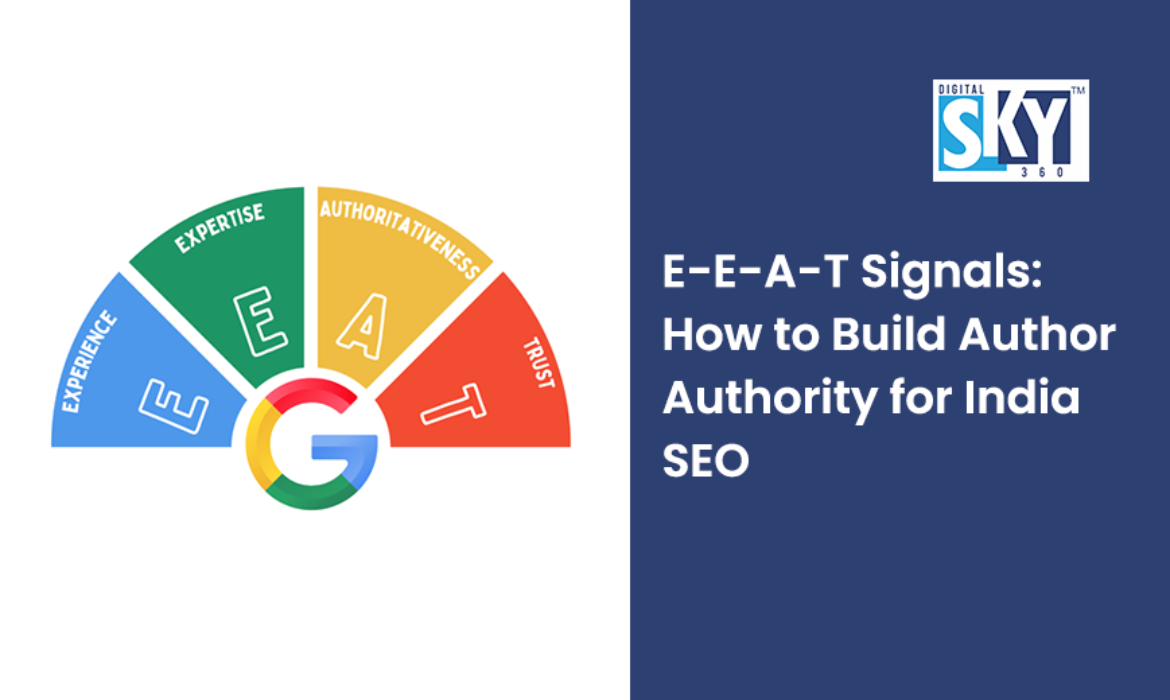
E-E-A-T Signals: How to Build Author Authority for India SEO
Imagine you just Googled “best mutual funds in India 2025” and the top result was written by someone whose bio reads: “Hi, I am Ravi. I like finance and cricket.” You’d close that tab faster than a WhatsApp forward from your relatives at 6 AM. Google feels exactly the same way — and that’s precisely why E-E-A-T exists.
If your content strategy is still stuck in the era of keyword stuffing and spinning articles, welcome to the rude awakening. Google’s E-E-A-T framework — Experience, Expertise, Authoritativeness, and Trustworthiness — has quietly become the single most important quality signal for ranking in India’s fiercely competitive search landscape. And the good news? Building it isn’t rocket science. It just requires being genuinely, demonstrably good at what you do.
Let’s break it all down.
What Exactly Is E-E-A-T, and Why Should Indian Marketers Care?
Google’s Search Quality Rater Guidelines use E-E-A-T to evaluate whether content genuinely helps users — or just exists to game algorithms. The extra “E” for Experience was added in late 2022, signalling a major shift: Google now wants proof that the author has lived the topic, not just read about it.
For India SEO, this matters enormously. India has one of the fastest-growing internet user bases in the world, with millions of new users coming online every year through regional languages, voice search, and mobile-first browsing. The content landscape is exploding — which means so is the competition. Standing out requires more than good writing. It requires credibility signals that both humans and algorithms can verify.
The Four Pillars — Explained for the Indian Context
1. Experience: “Have You Actually Done This?”
Google’s algorithms, especially for YMYL (Your Money or Your Life) topics — finance, health, law, education — want signals that the author has personal, first-hand experience.
For Indian publishers, this means:
- A travel blogger writing about visiting Ladakh should mention specific roads, dhaba stops, or border permit experiences — not just lifted facts.
- A finance writer covering SIPs should ideally be an investor themselves, with author bios and disclosures that reflect that.
- A cooking blogger writing about Maharashtrian recipes should demonstrate regional knowledge that only someone who grew up eating puran poli would know.
Think of it as the difference between a restaurant review written by a food critic who visited versus someone who read the Zomato listing. Google is getting scarily good at telling them apart.
2. Expertise: “Do You Know Your Subject?”
Expertise is about depth and accuracy. This is where On-page SEO plays a silent but powerful role — not just in keyword placement, but in how content is structured to demonstrate command of a topic.
Use proper heading hierarchies. Cite original sources like RBI reports, SEBI circulars, ICMR data, or government press releases. Write content that answers the next question the reader hasn’t asked yet. Interlink related articles to form topical clusters. These are signals Google’s crawlers read as markers of a knowledgeable source.
For Indian SEO, regional expertise matters too. A legal blog writing about property disputes should show familiarity with state-specific laws — not just copy-paste central government guidelines.
3. Authoritativeness: “Does the Internet Agree You Know This?”
This is the part most Indian content creators underestimate. Authoritativeness is built externally — through backlinks from credible Indian domains (.gov.in, leading news portals, educational institutions), media mentions, citations, and community recognition.
If you’re trying to grow a brand’s authority in a particular niche, you need a PR and digital strategy working alongside SEO. A digital marketing agency in Ahmedabad that combines link-building with content PR will typically outperform one that treats them as separate workstreams. Authority isn’t declared — it’s earned and referenced by others.
Get your authors quoted in The Hindu, Mint, or YourStory. Appear on Indian podcasts. Contribute to industry roundtables. These aren’t just vanity wins — they’re trust signals Google’s algorithms actively track.
4. Trustworthiness: “Can the Reader Rely on This?”
Trust is the glue that holds E-E-A-T together — and it’s built through transparency. For Indian websites, this means:
- Clear, verifiable author bios with LinkedIn profiles and credentials
- Accurate, regularly updated content (especially crucial in a market where policies, tax laws, and regulations change often)
- HTTPS-secured websites with clear privacy policies
- Transparent corrections and editorial policies
- Contact information that works — not a Gmail address for a “company”
Building Author Authority: A Practical Playbook for Indian Brands
Create Author Entity Pages
Every content creator on your platform needs a dedicated author page — not a two-line filler, but a page that includes credentials, professional history, social proof, and links to verified external profiles. Google uses these pages to associate an author’s identity with their content across the web.
Build Topical Authority Before Chasing Rankings
Instead of writing one blog about “home loans in India,” build a content ecosystem — articles on eligibility criteria, RBI rate impacts, documentation checklists, EMI calculators, lender comparisons. Monitoring key SEO metrics like topical coverage, crawl depth, and internal link equity will show you where authority is concentrated and where gaps exist.
Leverage Author Schema Markup
Technical SEO is non-negotiable. Implement Article and Person schema markup to help Google connect your author’s identity to each piece of content. This is one of the most underused signals in Indian SEO and gives an immediate structural advantage.
Collaborate With Recognised Indian Voices
Co-authorship, guest posts from domain experts (doctors, CAs, lawyers, engineers), and expert quote inclusions dramatically boost E-E-A-T. A blog on tax-saving strategies co-written by a certified CA ranks with inherently more trust than one authored by an anonymous “editorial team.”
E-E-A-T for Small Businesses and Regional Brands
Building authority doesn’t require a corporate budget. Small business SEO thrives on local credibility — Google Business Profile optimisation, customer reviews, local citations, and niche expertise. A homeopathy clinic in Pune that consistently publishes well-researched, experience-driven content on specific conditions — backed by the doctor’s verified credentials — will outrank a generic health portal on those specific local queries.
Similarly, a social media marketing agency in Ahmedabad that shares client success stories, team credentials, and transparent case studies will build E-E-A-T far faster than one hiding behind polished but hollow website copy.
What AI Means for E-E-A-T in India
Here’s the elephant in the room: AI-generated content. With tools flooding the market, Google has doubled down on E-E-A-T precisely because of AI. A well-known seo company in Ahmedabad recently shared that AI-assisted content which lacked human editorial review and author attribution dropped significantly in rankings after Google’s Helpful Content updates — while human-validated, experience-rich content climbed.
The lesson? AI is a production tool, not an authority builder. Use it to draft and research. But the experience, the credentials, and the editorial stamp? That has to be human.
Final Thought: Authority Is Not an Algorithm Hack — It’s a Reputation
E-E-A-T is Google’s way of asking: “Would a real human trust this enough to act on it?” In India’s diverse, multilingual, mobile-first market, the bar for earning that trust is high — and rising.
The brands and creators who invest in building genuine author authority — through visible credentials, real-world experience, external recognition, and transparent communication — will not just rank better. They will deserve to.
And that, in the long run, is the only SEO strategy that survives every algorithm update.
Twitter/X Marketing for Indian B2B Companies
There is a quiet irony sitting right at the heart of Indian B2B marketing in 2026.
Every week, founders and marketing teams debate which platform to focus on. LinkedIn gets the boardroom nod because it sounds serious. Instagram gets the budget because everyone can see the Reels. WhatsApp gets the WhatsApp group. And Twitter/X? It gets a half-hearted festive post on Diwali and a vague promise to “do more with it soon.”
Meanwhile, the procurement manager at a mid-sized manufacturer in Pune is scrolling Twitter/X during his commute. The CTO of a logistics startup in Delhi just bookmarked a thread on fleet management software. A textile exporter in Ahmedabad is asking a question in reply that is essentially a pre-qualification for a vendor relationship — and nobody from any B2B company is in that conversation.
This is the untapped opportunity that most Indian B2B companies are walking past every single day.
Why Twitter/X Still Matters Deeply for Indian B2B
Let’s be clear about what Twitter/X is in India in 2026. It is not the biggest platform by users. It is not where your grandmother shares recipes or where teenagers post dance videos. What it is — and this matters enormously for B2B — is the platform where India’s most commercially influential people are most unguarded.
CEOs, startup founders, VCs, sector analysts, journalists, policy consultants, senior procurement professionals — these people post their real frustrations on Twitter/X in a way they never would on LinkedIn. A manufacturing head venting about a supplier’s quality failure. A CFO asking for honest software recommendations. A founder sharing a failed vendor experience. These are real signals from real buyers, and they are happening in public, in real time, completely searchable.
For Indian B2B companies that know how to listen and participate — not broadcast — Twitter/X is less of a social media platform and more of a live, always-on business intelligence feed with a built-in direct line to decision-makers.
The Problem: Most Indian B2B Brands Are Doing It Wrong
Scroll through the Twitter/X accounts of most Indian B2B companies — industrial suppliers, B2B SaaS firms, logistics providers, consulting houses — and you will see the same tired pattern repeating itself.
Corporate announcements with press-release energy. Award wins that nobody outside HR cares about. Generic industry statistics quoted without any original perspective. And the inevitable “Wishing you and your family a very Happy [Festival]” post with the company logo dropped in the corner.
This is not marketing. This is digital housekeeping with a social media badge on it.
The fundamental misunderstanding is treating Twitter/X like a noticeboard rather than a conversation. B2B buyers on this platform are not waiting to read your brochure in tweet format. They are waiting to hear from someone who understands their world well enough to say something worth reading.
What Actually Works: A Practical Twitter/X Playbook for Indian B2B
1. Lead With Genuine Expertise, Not Company News
The most effective Twitter/X accounts in any Indian B2B vertical — and they are rare, which is exactly the point — are the ones that teach something specific and useful with every post.
A specialty chemical company that posts a thread explaining why a particular industrial solvent is being replaced across European supply chains, and what Indian manufacturers need to know about substitute sourcing — that post will be retweeted by every procurement manager in that industry. One well-researched, genuinely useful thread does more for brand awareness than six months of logo posts.
Your company knows things that your potential clients need to know. Twitter/X is the fastest path from that knowledge to those clients.
2. Build the Founder’s Voice Alongside the Company Account
In Indian B2B markets, people buy from people they trust. The founder or managing director who builds a personal Twitter/X presence — sharing real opinions, lessons from business failures, and unfiltered takes on industry trends — will always outperform the sanitised company account.
Look at how Bhavish Aggarwal comments on EV policy. How Kunal Shah talks about Indian consumer behaviour. How Nithin Kamath demystifies capital markets. These leaders are not just sharing company news. They are building authority by consistently sharing expertise at scale. That authority converts to business credibility in ways no ad campaign can replicate.
The B2B founders who start building this voice today will be the trusted names in their industries that everyone else is trying to catch up with in two years.
3. Engage Before You Broadcast
Spend the first 15 minutes of your Twitter/X day not posting — reading and responding. Find the conversations happening in your industry. Look for questions from potential clients. Add substantive, specific value to threads started by analysts or journalists covering your sector.
This is how visibility compounds on Twitter/X. Not through follower hacks or posting frequency alone, but through repeated genuine contributions that cause the right people to think: This company consistently makes me think differently. I should pay attention to them.
4. Use Real-Time Moments to Demonstrate Authority
Twitter/X rewards timeliness above almost everything else. When a new import duty is announced, when a regulatory change lands, when a sector-defining merger happens — the B2B companies that publish a sharp, informed perspective within the first hour earn disproportionate attention.
Build a simple monitoring system: Google Alerts for your key industry terms, a Twitter/X list of the regulators, analysts, and journalists who break news in your sector. When something relevant happens, be the first informed voice in the conversation. Do this consistently and you become the account your industry turns to for sense-making.
Integrating Twitter/X Into Your Wider Digital Strategy
Twitter/X does not work in isolation. Its real power emerges when it is part of a connected digital presence.
The insights your team gathers from monitoring Twitter/X conversations — real pain points, objections, questions, competitor weaknesses — should feed into your content strategy across every other channel. That thread about procurement challenges? It becomes a detailed blog post. The founder’s take on regulatory change? It becomes a LinkedIn article. The most-engaged reply you gave to a client question? It is the seed of your next webinar topic.
If you are figuring out how the full digital ecosystem fits together for Indian businesses, understanding How Ahmedabad Businesses Are Growing with Digital Marketing gives a grounded, real-world picture of what integrated digital growth actually looks like in practice.
Twitter/X also works beautifully as a top-of-funnel awareness driver when coordinated with deeper conversion-focused channels. WhatsApp Business Marketing remains India’s most powerful channel for nurturing warm leads — and a potential client who discovered you through a Twitter/X thread is far more receptive when they receive a WhatsApp follow-up from your sales team, because they already have context about who you are and why you are credible.
For companies in more visual industries — design, interior solutions, food and beverage, FMCG — complementing your Twitter/X presence with a strong visual strategy is essential. The Instagram Marketing Guide is particularly useful for businesses that need to coordinate their visual brand identity across platforms while maintaining distinct messaging strategies for each.
What Does Twitter/X Marketing Actually Cost?
This is the question every B2B decision-maker eventually asks, and the answer is more encouraging than most expect.
Organic Twitter/X strategy — building a thought leadership presence through consistent, high-quality content — is primarily a time investment. Approximately 5 to 8 hours per week for a founder actively building their voice, or a dedicated social media team member. The financial outlay for organic is essentially zero beyond staff time.
Paid Twitter/X advertising, when added as an amplification layer, is where the real value calculation becomes interesting. Social Media Cost in India on Twitter/X remains competitive compared to other platforms, particularly for B2B targeting. Cost-per-click for promoted tweets targeting Indian business professionals typically runs between ₹8 and ₹35, depending on audience specificity and campaign objective — significantly lower than equivalent LinkedIn campaigns targeting similar professional demographics.
For a high-value B2B product or service where a single converted client is worth lakhs or crores, these acquisition costs are frankly extraordinary value.
When to Bring in Expert Support
There is a clear inflection point where Twitter/X strategy benefits from professional guidance — particularly when you are trying to build a coordinated presence across multiple platforms simultaneously, run targeted paid campaigns, and maintain consistent content quality without consuming your entire leadership team’s bandwidth.
Working with a Digital Marketing Agency In Ahmedabad that understands both the nuances of the platform and the specific dynamics of Indian B2B markets can compress months of trial and error into weeks of structured execution. Similarly, a Social media Marketing Agency in Ahmedabad with genuine B2B experience brings audience targeting precision, content frameworks, and analytics infrastructure that most in-house teams build slowly and expensively from scratch.
The Window Is Open — For Now
Here is the uncomfortable truth about the Twitter/X opportunity for Indian B2B companies: it exists precisely because most companies are ignoring it. The moment it becomes crowded — the moment every competitor has a polished content strategy and an engaged founder account — the first-mover advantage disappears.
That moment is not here yet. Most Indian B2B verticals are wide open on Twitter/X right now.
Show up. Say something real. Be useful. Stay consistent.
The buyers you are trying to reach are already there, waiting for a B2B company that actually deserves their attention.
YouTube Channel Strategy for Ahmedabad Businesses
If you run a business in Ahmedabad and you’re not on YouTube yet, you are genuinely leaving money on the table — and possibly handing it to your competitor who is.
YouTube is not just a place to watch movies, cricket highlights, or cooking tutorials anymore. It is, without any exaggeration, India’s #1 search engine for video content. When someone in Satellite, Navrangpura, or Maninagar wants to understand how something works, compare products, or find a trusted local service provider, they often type it into YouTube before they type it into Google. That single fact should change how every Ahmedabad business thinks about its marketing.
This guide breaks down a realistic, actionable YouTube strategy designed specifically for businesses rooted in Ahmedabad — whether you run a textile showroom on Ring Road, a CA firm in Prahlad Nagar, an EdTech startup near SG Highway, or a mid-sized B2B manufacturer in Vatva GIDC.
Why YouTube Matters More for Ahmedabad Than Most Cities Realise
Ahmedabad is a city that rewards trust. The Gujarati business community, by its very nature, does business with people it knows, respects, and has observed over time. YouTube, uniquely among all platforms, builds that kind of familiarity at scale.
When a potential client in Anand watches your factory walkthrough video, when a textile buyer in Surat hears you explain your sourcing process in Gujarati, or when a young entrepreneur from Gandhinagar watches your founder’s story — they are not just watching content. They are making a trust decision. YouTube gives you 8, 10, or 15 uninterrupted minutes to make that case. No algorithm is cutting you off after 30 seconds. No competitor ad is running beside your face mid-sentence.
Beyond trust, the sheer numbers matter. India now has over 500 million YouTube users, and Gujarat is one of the highest video-consuming states in the country. Your audience is already there. The question is whether your business is showing up for them.
Step 1: Define Your Channel’s Core Purpose Before You Press Record
Many Ahmedabad businesses jump straight into making videos without answering a single critical question: What is this channel actually for?
Your YouTube channel should serve one of three purposes — and ideally all three simultaneously:
1. Discovery — People who have never heard of your brand find you through search. A CA firm that publishes a video titled “GST Return Filing Mistakes for Small Businesses in Gujarat” will attract exactly the right audience who needs their services.
2. Consideration — People who have heard of you come to understand why they should choose you. Product demonstrations, process videos, behind-the-scenes factory tours, and client testimonials all do this job beautifully.
3. Retention — Your existing customers keep engaging with your brand through educational or entertaining content, which drives repeat business and referrals.
Once you know which of these is your primary objective, every content decision — length, format, language, publishing frequency — becomes much easier to make.
Step 2: Build a Content Pillars Framework Around Your Audience
In Ahmedabad’s business landscape, your audience is not homogeneous. A pharmaceutical company in Naroda will have distributors, doctors, patients, and regulators as distinct audience segments. A real estate developer near Bopal will speak very differently to first-time homebuyers versus NRI investors.
Map out three to five content pillars that cover different angles of your expertise and audience needs. For example, a textile business in Ahmedabad’s famous cloth market might build pillars around:
- Fabric education and trend forecasting (attracts buyers and resellers)
- Manufacturing process and quality control (builds trust with bulk purchasers)
- Business tips for the textile trade (positions the brand as an industry leader)
- Behind-the-scenes storytelling in Gujarati and Hindi (drives relatability and shares)
This pillar approach ensures your channel never runs out of ideas and your content always serves a specific audience need rather than being created for creation’s sake.
Step 3: Language Strategy — Gujarati, Hindi, or English?
This is one of the most underrated strategic decisions for any Ahmedabad-based YouTube channel, and most businesses get it wrong.
The default assumption is to produce content in English because it “feels more professional.” But the data tells a completely different story. Gujarati-language video content is dramatically under-produced relative to the size of the audience that wants it. A manufacturing business that publishes detailed product explainers in Gujarati faces almost zero competition in search results, while the same video in English drowns in a sea of international content.
The right approach for most Ahmedabad businesses is a tiered language strategy:
- Gujarati for local community, SME audiences, and relationship-heavy industries like textiles, agri-business, and real estate.
- Hindi for pan-India reach, especially if your products or services serve markets beyond Gujarat.
- English for B2B exports, tech products, and professional services targeting corporate clients or international buyers.
Many smart Ahmedabad channels are now producing bilingual videos — starting in Gujarati or Hindi and adding English subtitles — capturing the benefits of both worlds without doubling the production effort.
Step 4: Production Quality That Matches Your Brand (Not Your Budget)
Here is the honest truth: you do not need a professional studio to start a YouTube channel. What you do need is adequate lighting, clear audio, and a consistent visual identity.
A phone with decent natural light will outperform an expensive camera in a dark room every single time. Invest ₹3,000 to ₹5,000 in a lapel microphone and a basic ring light before you invest in anything else. These two upgrades alone will make your videos look and sound noticeably more credible.
As your channel grows, you can invest in a proper video production setup, hire an in-house editor, or partner with professionals. But the biggest mistake Ahmedabad businesses make is waiting for “perfect” production quality before publishing anything at all. Consistency builds channels. Perfection paralysis kills them.
Step 5: YouTube SEO — Getting Found in Search
YouTube is a search engine. That means your video title, description, tags, and thumbnail are not cosmetic choices — they are your discoverability infrastructure.
For Ahmedabad-based businesses, local SEO signals on YouTube are enormously powerful because so few local businesses use them. When you include terms like “Ahmedabad,” “Gujarat,” or specific locality names in your video titles and descriptions alongside your main keywords, you activate a layer of search specificity that most national competitors simply cannot compete with.
Some practical YouTube SEO tips:
- Write video titles the way people actually search: “How to register a private limited company in Ahmedabad” beats “Company Registration Guide 2026.”
- Write your video description in at least 200 words. YouTube indexes this text. Tell the full story of what the video covers.
- Add timestamps (chapters) to every video longer than five minutes. YouTube rewards structured content in its algorithm.
- Use a custom thumbnail with your face or a key visual element. Click-through rate is one of YouTube’s most important ranking signals.
- Create playlists that group related videos together. Playlists extend watch time across your channel, which YouTube’s algorithm rewards heavily.
Step 6: Integrate YouTube With Your Broader Digital Presence
YouTube should never function as an isolated island. Its power multiplies dramatically when it is connected to your full digital ecosystem.
Embed your YouTube videos on your website’s service pages and blog posts. A law firm in C.G. Road that embeds a “What is Section 138 of the Negotiable Instruments Act?” explainer video on its relevant service page will see both longer dwell time and improved Google rankings for that page — because Google now considers video content a significant quality signal.
Share your videos across LinkedIn, WhatsApp Business, and Instagram. Each platform distributes the same content to a different segment of your audience and drives traffic back to your channel.
If you are building a serious digital marketing strategy, the Social Media Marketing Master Guide is an excellent resource for understanding how YouTube fits into a multi-platform approach specifically for Indian businesses.
For B2B companies in Gujarat — especially manufacturers, exporters, and professional services firms — do not underestimate the role of LinkedIn Marketing for Gujarat as a complementary channel. Your YouTube video content can be repurposed as LinkedIn posts, articles, and thought leadership pieces that reach decision-makers your videos alone might not.
Step 7: Consistency, Analytics, and Iteration
Publishing one great video is not a YouTube strategy. Publishing 12 videos consistently over three months, analyzing what worked, and doubling down on it — that is a strategy.
Review your YouTube analytics every month. The metrics that matter most for Ahmedabad businesses building organic audiences are:
- Average view duration (Are people watching most of your video, or dropping off early?)
- Click-through rate on thumbnails (Is your visual and title compelling enough to earn the click?)
- Traffic source breakdown (Are people finding you through YouTube Search, Suggested Videos, or external links?)
- Subscriber growth (Are viewers who found one video choosing to follow you for more?)
Use this data to make content decisions, not gut instinct. If your Gujarati-language videos consistently outperform your Hindi ones, that is a signal your audience is telling you something important.
Step 8: Amplify With Collaboration and Influencer Reach
Growing a YouTube channel from scratch takes time. One of the most effective ways to accelerate that growth is through strategic collaboration.
Consider co-creating content with complementary businesses in Ahmedabad — a wedding photographer partnering with a bridal jewellery brand, or a fitness equipment supplier partnering with a personal training studio. These collaborations expose your channel to pre-qualified audiences who are likely to be interested in what you offer.
Beyond direct business collaboration, working with content creators and influencers who already have established audiences in Gujarat is a powerful growth lever. If you want a deeper framework for doing this effectively, Influencer Marketing in Gujarat offers a practical guide to finding and vetting the right creator partnerships for your brand.
Understanding Investment and Social Media Cost
One question every Ahmedabad business owner asks when planning a YouTube strategy is: what will this actually cost?
The honest answer is that social media cost in India varies enormously based on your goals, production approach, and how much you are willing to invest in paid amplification. Organic YouTube growth is primarily a time investment — ideally 8 to 15 hours per video including planning, filming, editing, and publishing. If you are outsourcing production, expect to invest anywhere from ₹5,000 to ₹50,000 per video depending on production quality and agency rates.
Paid YouTube advertising through Google Ads can be an extremely cost-effective way to amplify your best-performing organic content. CPM rates in India remain among the lowest globally, which means your advertising spend goes significantly further here than it would in Western markets.
When to Bring in Professional Help
There is a point in every successful YouTube channel’s growth where the workload outpaces what an in-house team can manage. At that stage, partnering with a Digital Marketing Agency In Ahmedabad that understands both local market nuances and YouTube’s ever-evolving algorithm can be the difference between a stagnant channel and one that consistently generates leads.
Similarly, working with a Social media Marketing Agency in Ahmedabad can help you build a cohesive cross-platform strategy where your YouTube content feeds your Instagram Reels, your LinkedIn posts, your WhatsApp Business broadcasts, and your website — creating a compound digital presence that is genuinely difficult for competitors to replicate.
The Ahmedabad Advantage
Ahmedabad is not just a city — it is a commercial mindset. The entrepreneurial drive that built the textile mills, that powers the pharmaceutical corridors of Vatva, that runs the busy offices of GIFT City — that same energy, when channelled into consistent, authentic YouTube content, creates something extraordinarily powerful.
Your story is your competitive advantage. YouTube is simply the medium through which you tell it, at scale, to the people who most need to hear it.
Start today. Stay consistent. Trust the process.
Influencer Marketing in Gujarat: How to Find & Work With Nano-Influencers
In a market as diverse and dynamic as Gujarat, influencing the right people is not about volume; it’s about finding the right language. While the big stars might capture attention, it’s the nano-influencers, the Maninagar foodies, or the Surat techheads, who are moving the needles on “Add to Cart” in 2026.
As a business owner or a digital marketing agency in Ahmedabad, this is the key to turning a “reach and impress” campaign into a high-ROI campaign.
What Exactly Is a Nano-Influencer? (The “Goldilocks” Zone)
In the world of influencer marketing, size isn’t everything. In fact, bigger is often noisier and less effective for local brands.
Defining the Numbers
A nano-influencer typically commands a following of 1,000 to 10,000 people. They aren’t “celebrities” in the traditional sense; they are the people your audience goes to for a recommendation on the best fado in town or which laptop to buy for college. In the Indian digital landscape, this bracket is the “Goldilocks Zone”: small enough to care but big enough to matter.
The Trust Factor
Why does a recommendation from a local creator in Vadodara feel more potent than a Bollywood star’s endorsement? It’s the “Cousin Effect.” A nano-influencer feels like a trusted peer. If they share a story on a new cafe on Sindhu Bhavan Road, they know they have tried it. It’s this trust a global social media marketing agency in Ahmedabad uses to connect with the community.
Why Gujarat is the Perfect Sandbox for Nano-Influencers
Guajarat is a hub of entrepreneurs. Its residents have a “business first” attitude, which impacts their approach to content. They expect content to be useful, authentic, and relevant.
Cultural Nuance & Dialect
The power of local dialects is not to be overlooked. It could be the poetic elegance of Surti Gujarati or the no-nonsense Kathiyawadi dialect, but nano-influencers are “localizing” their message. “Gujarati-isms” create instant rapport that non-Gujarati corporate speak cannot.
The “Vibrant Gujarat” Digital Boom
With high mobile penetration in tier-2 cities like Bhavnagar, Jamnagar, and Rajkot, there is a massive untapped audience. These users aren’t looking at global trends; they are looking for what is happening in their backyard. This is where a specialized SEO company in Ahmedabad finds the most success by targeting the hyper-local search intent that these influencers naturally generate.
How to Find Your Tribe: The “Hunt” Strategy
Finding a creator with 5,000 followers is actually harder than finding one with 500,000. You won’t find them on global “top lists. “You have to go local.
1. Master the Geo-Tag and Local Hashtags
Don’t just search for #Influencer. You need to dig into location-specific tags that represent the Gujarat lifestyle.
- Search Tags: #AhmedabadFoodie, #SuratFashion, #VadodaraVibes, #RajkotDiaries.
- Location Tags: Look for “Recent” posts at popular spots such as the Sabarmati Riverfront and luxury malls.
2. Leverage SEO Data
Your SEO company in Ahmedabad can be a secret weapon here. By looking at which local blogs or forums are ranking for keywords in your industry, you can discover the “hidden” influencers. Those who are actively participating in local Facebook groups and forums are also the same people with a small but passionate following on Instagram and YouTube.
The Secret Sauce: A Robust Video Strategy
In 2016, pictures are the “newspaper” of social media. They’re there, but not very effective. If you want to succeed in Gujarat, your video strategy should be “Reel” friendly.
- Honesty is Key: Gujaratis are honest people. Any amateur video of a vlogger using your product in a relatable setting will do better than a professional commercial.
- The “Stop the Scroll” Hook: The first three seconds of a video must feel local. Whether it’s a familiar street view or a greeting in Gujarati, that local “flavor” is what prevents the user from swiping up.
How to Work with Nano-Influencers (The Collaboration Framework)
Working with smaller creators requires a different touch than dealing with talent managers. It’s personal.
Personalized Outreach
Forget the copy-paste DMs. If you want a nano-influencer to take you seriously, show them you’ve actually watched their content. Mention a specific post they made about a local event. This builds rapport before the business talk even begins.
Creative Freedom: Briefs, Not Scripts
You hired them for their voice. If you force them to read a corporate script, their audience will smell the “ad” from a mile away. Provide a brief that outlines the “must-say” points (like a specific feature or a discount code) but let them choose the setting, the tone, and the language.
Amplifying Results with Paid Media
The smartest brands don’t just let the influencer post and hope for the best. They treat that content as a high-performing creative asset.
The Whitelisting Strategy
This involves running Facebook ads in India directly through the influencer’s account rather than the brand’s account. When a user sees a “Sponsored” post from a creator they recognize, the click-through rate (CTR) is significantly higher than a standard brand ad.
Retargeting the “Warm” Audience
A social media marketing agency in Ahmedabad will often use influencer content to “warm up” a target demographic. Once a user engages with an influencer’s video about your product, you can retarget that specific user with a conversion-focused ad. It’s a 1-2 punch that leads to much lower customer acquisition costs.
Measuring Success: Beyond the “Like” Button
If you are spending money, you need to see the return. Nano-influencers allow for very granular tracking if you set it up correctly.
- Custom Discount Codes: Give each influencer a unique code (e.g., “AMD10” or “SURAT20”). This is the cleanest way to track direct sales.
- UTM Parameters: If you are driving traffic to a website, use UTM links to see which creator is staying on the page the longest.
- Sentiment Analysis: Read the comments. If followers are asking about the price, the location, or the shipping to Gujarat, the influencer has done their job; they’ve created “intent.”
How Nano-Influencers Boost Your Local SEO
A lot of companies fail to realize that influencer marketing and search engine optimization (SEO) go hand in hand. When you engage with ten nano-influencers in Ahmedabad, they are not only sharing a post on Instagram; they are building your brand’s online presence.
- Social Signals: When your brand is tagged with “Ahmedabad” and there is significant engagement, Google algorithms recognize your brand as being relevant for that location.
- Local Backlinks: If the influencers also have micro-blogs or YouTube channels, the links back to your site become local backlinks.
Common Pitfalls to Avoid
- One-Off Campaigns: Influencer marketing is like SEO; it needs consistency. One post is a handshake; three posts over three months is a relationship that builds trust.
- Ignoring Mid-Tier Cities: Don’t just focus on Ahmedabad. Surat, Rajkot, and Vadodara have massive purchasing power and often less competition for influencer attention.
Conclusion
The online world is changing in Gujarat. The age of the “unapproachable celebrity” is over, replaced by the age of the “approachable expert.” To succeed in this market you have to get down and dirty.
Whether you are a startup or an established firm, partnering with a digital marketing agency in Ahmedabad to find and manage these nano-voice creators is the most sustainable way to grow. Start small, be authentic, and speak the language of your customer. In the land of the Sabarmati, trust is the only currency that never devalues.
Ready to launch your first local campaign? The community is already talking; it’s time your brand becomes part of the conversation.
How to Run Facebook Ads in India with a ₹5,000/month Budget
Small business owners in India feel like they have been edged out of the advertising game. When mega companies spend lakhs in a single day, it is easy to think that ₹5000 a month, or ₹165 a day, is nothing but a drop in the ocean. But here is the secret: India is still one of the cheapest ad markets worldwide. While you might not be able to “carpet-bomb” the entire country with ads, a ₹5,000 budget allows for a “sniper” approach that can yield incredible results.
Whether you are a startup in Gujarat looking for a digital marketing agency in Ahmedabad or a solo creator trying to figure out a YouTube channel strategy, this social media marketing guide is designed to show you how to stretch every rupee. At this level of spending, you aren’t just running ads; you are performing precision surgery to find your most relevant audience.
Setting the Foundation: Strategy Over Spend
When your budget is tight, your strategy must be airtight. You cannot afford to be “broad” or “generic.” Every rupee needs a purpose. In 2026, the Meta algorithm has become incredibly sophisticated, but it needs clear signals from you to work its magic, such as specific targeting criteria and well-defined goals for your advertising efforts.
Choosing the Right Campaign Objective
With ₹165 a day, you don’t have enough “fuel” to feed a complex “conversion” or “sales” campaign. Those objectives require a high volume of data to optimize, which usually costs more than your daily limit. Instead, focus on awareness or engagement. These objectives have the lowest CPM (Cost Per 1,000 Impressions) in the Indian market, often ranging between ₹40 and ₹90. This allows your ₹5,000 to reach between 50,000 and 120,000 people. If you are a social media marketing agency in Ahmedabad, using “Engagement” to promote a high-value tip or case study builds the social proof you need to win bigger clients later.
Hyper-Local Targeting to Reduce Waste
A common mistake is trying to target all of India with a small budget. If you do that, your ad is like a single grain of sand on a beach. Rather, concentrate on consciousness or activation. These goals have the lowest CPM (Cost Per 1,000 Impressions) in the Indian market, which is usually in the range of ₹40 to 90. By narrowing your geography, you increase the “frequency” (how many times a single person sees your ad). It is much better to have 1,000 people see your ad five times than to have 5,000 people see it once. This creates a “big brand” feel in your specific neighborhood.
The Power of Advantage+ Audience
In 2026, manual targeting is slowly becoming a thing of the past. For a low-budget campaign, use Advantage+ Audience. Instead of picking fifty different interests, give the AI a few “suggestions” (like “Small Business” or “E-commerce”) and let the algorithm do the heavy lifting. Meta’s AI analyzes billions of data points to find people who actually interact with content like yours. This prevents you from “starving” the algorithm with too many restrictive layers, allowing it to find the cheapest possible leads or views.
Crafting High-Impact Creatives on a Shoestring
If your ad looks like an ad, people will skip it. In an era of “banner blindness,” your creative work must do the work that your budget cannot by being engaging and authentic, capturing the audience’s interest in a way that feels organic rather than promotional. You are competing for attention with friends, family, and viral memes.
Reels-First Content Strategy
Vertical video is the undisputed king of 2026. Facebook ads in India see the highest engagement rates and the lowest costs on Reels and Stories placements. You don’t need a professional film crew; a smartphone and a well-lit corner are more than enough. Create “edutainment” content that teaches something valuable while remaining entertaining. This mirrors a successful YouTube channel strategy, where providing value-first content earns the user’s trust long before you ever ask them to buy something.
Using a “UGC” (User Generated Content) Style
High-production ads often feel “fake” to the modern Indian consumer. Authenticity is the new currency. Use “lo-fi” videos for authentic customer testimonials, a quick tour of your office, or even a “day in the life” of your business. This “human-to-human” touch is exactly what any top-tier Digital marketing agency in Ahmedabad would recommend. When an ad looks like a post from a friend, people stop scrolling, and that “thumb-stop” is where the profit begins.
A/B Testing with Micro-Budgets
Even with a ₹165/day budget, you should never put all your eggs in one basket. Run two versions of your ad (Ad A vs. Ad B) with different headlines or different opening hooks. Split your daily budget between them for three to four days. Whichever ad has a higher Click-Through Rate (CTR) or lower Cost Per View (CPV) becomes the winner. Move the full budget to that winner for the rest of the month. This ensures your ₹5,000 is always working on the most effective creative possible.
Optimization and Long-Term Growth
Running the ad is only half the battle. The second half is watching the data and pivoting based on what the Indian audience is telling you through their behavior.
Monitoring Key 2026 Metrics
In 2026, “Likes” are a vanity metric. You want to focus on CTR (Click-Through Rate) and CPM. In India, a healthy CTR for a small business is usually above 1%. If your CTR is 0.5%, it means your creativity isn’t resonating, and you’re essentially throwing money away. If your CPM is too high (above ₹200), your audience might be too narrow, or you are competing in a high-demand peak season (like Diwali). Learning to read these “levers” is the core of what a professional digital marketing agency does to maintain a positive ROI.
Retargeting: The Fortune is in the Follow-up
Did you know that most people need to see a brand 7 to 10 times before they trust it enough to buy? This is where retargeting comes in. Use a small portion of your budget (even ₹30/day) to show a different ad only to people who watched 50% of your first video ad. Such a secondary ad might be a discount code or an FAQ video. This provides a funnel effect that gives your small business a much larger and more established look than what it really is.
Scaling Beyond ₹5,000
After you notice a steady stream of questions or traffic, your initial thought is to increase your budget. Don’t do it. Meta’s algorithm is sensitive to sudden changes. If you want to scale, increase your daily spend by 15–20% every 3 to 5 days. This “slow-burn” scaling keeps the algorithm in its “learning phase” without breaking the optimization. This is the most sustainable path to growing a small ₹5,000 experiment into a major marketing engine.
Conclusion
Running Facebook ads in India with a ₹5,000 budget is about being the “smartest” person in the room, not the richest. With hyper-local awareness, the use of AI-powered Advantage+ targeting, and the focus on authentic content in the style of Reels, you can create massive momentum behind your brand.
This social media marketing guide is just the beginning. The online world does not favor the rich only but the regulars too. Begin with what you have and learn out of the data, and scale to success.
What do you find the most confusing in the Facebook Ads Manager, the audience targeting or the creative setup?
Ultimate Reels & Short Video Strategy for Indian Brands in 2026
The Indian consumer has experienced a seismic change in the way they relate to brands in the vibrant digital world of 2026. When you visit a busy market in Ahmedabad or a technology park in Bengaluru, you will not find people on their phones; you will see them in a vertical world of Reels and Shorts. Short-form video has become the primary language of the Indian internet. For brands, this isn’t just a “trend” to follow; it’s the heartbeat of their digital presence.
Moving into this year, the game has changed from chasing a one-hit-wonder viral moment to building a sustainable, community-focused presence. It’s about “social search,” where users look for your brand in the Explore tab rather than a search engine. To truly master this, many businesses are turning to a digital marketing agency in Ahmedabad to translate global trends into local success stories.
This guide will walk you through the exact blueprint you need to own the vertical screen.
Understanding the Indian “Short-Video” Psychology
To win on Reels, you have to understand the mind of the Indian scroller. In 2026, the average user spends about 52 minutes a day specifically on short-form video. To capture even a fraction of that time, you need to understand that Indian audiences are looking for more than just a pretty video; they are looking for a connection.
The Rise of Vernacular Content and “Bharat”
The era of “English-only” corporate videos is officially over. Statistics indicate that more than 80% of Indian users are more relatable to regional-language content. Be it Gujarati, Marathi, or Hinglish, the language of the heart is what makes one engage today. A social media marketing firm in Ahmedabad knows this Bharat mentality and assists brands to produce content that appeals in Tier 2 and Tier 3 cities where the digital wave is raging. When you speak the local tongue, you aren’t just a brand; you become a neighbor.
Social Search: The New Google
Have you noticed that when people want to find a new cafe or a pair of sneakers, they head to Instagram or YouTube Shorts? Your Reels need to be optimized with “spoken keywords” and descriptive captions. It’s no longer just about the music; it’s about making sure the algorithm knows exactly what problem you are solving so it can serve your video to the right person at the right time.
Authenticity Over Aesthetic
The “perfectly polished” look is being replaced by what many call “brands with soul.” Consumers are experiencing digital fatigue and are calling out “performative polish.” They want to see the behind-the-scenes chaos, the real faces behind the product, and the unedited truth. This “lo-fi” approach actually builds more trust than a high-budget commercial ever could. In 2026, showing that you care loudly and earnestly is your greatest competitive advantage.
Building a Winning Content Strategy
Mastering the Hook-Value-CTA Framework
You have 2 seconds to prevent a user from scrolling past your post. Your “hook” is that first frame. After you have them, you need to provide immediate, “snackable” value: a tip, a laugh, or a shocking fact. Last, always leave them hanging. Your Call to Action (CTA) must be understandable and culturally acceptable. Rather than a generic link in bio, be more direct, as “WhatsApp” or a catalog or checking our stories the reveal would be a better fit with how Indians do their shopping.
Integrating AI and Automation in Production
In 2026, AI will not replace but enhance creativity. AI is enabling smart brands to accelerate their processes by almost 45%. This involves applying AI to provide instant multi-language subtitling and sentiment analysis to understand which of the hooks are really effective. This helps you get the mundane aspects of video editing automated and allows your team to concentrate on the storytelling aspect that can only be achieved by a human. It has to do with the production of quality rather than quantity of content.
Amplifying Reach with Paid Media
Facebook Ads for Real Estate and High-Ticket Services
Video has brought a phenomenal revolution in real estate. In 2026, Facebook real estate advertising based on the use of virtual tour reels is the golden standard of lead generation. Because the sales cycle for property is longer, these visual walkthroughs build the trust necessary to move a lead from a click to a site visit. Statistics show that users who watch at least 50% of a video ad are significantly more likely to convert into high-quality inquiries.
The Synergy Between Organic Reels and Paid Whitelisting
The smartest move a brand can make is “whitelisting” or “boosting” an organic reel that is already performing well. This is often called a “Dark Post.” By putting money behind a video that people already like, you ensure your ad doesn’t feel like an ad. This is especially effective when partnering with micro-influencers.
Hyper-Local Targeting for Urban Brands
For a business in a city like Ahmedabad, broad targeting is a waste of money. In 2026, “PIN code” level targeting has become essential. A social media marketing agency in Ahmedabad can assist you in installing geo-fenced advertisements that will only be displayed to individuals who are within a 5 km radius of your store. Envisage a customer passing by your shop and viewing a reel of your new collection on his or her feed. This is the strength of hyper-local video advertising.
Measuring Success and ROI
Moving Beyond “Vanity Metrics”
A million views are fantastic but may not always cover the bills. In 2026, the metrics that matter are Saves and Shares. A save means that your content was useful enough to save it as something to go through later, and a share means that your brand has received a personal recommendation. Also, monitor your “Profile Visit” percentage. If people are watching your Reels but not clicking through to your profile, your content might be entertaining, but it isn’t “brand-building.”
Measuring Social Media Results with Data-Driven Precision
To see the real impact, you must use UTM parameters and advanced tracking to see which Reel actually led to a website sale or a lead form submission. Measuring social media results through the lens of Return on Ad Spend (ROAS) is crucial. Interestingly, Reels are now delivering a 4.8x ROAS compared to just 2.1x for standard feed posts. This data proves that the vertical format isn’t just for fun; it’s a high-performing sales channel.
The Importance of Monthly Audits
The digital world moves fast, and what worked in January might not work in June. Conduct monthly audits to check your “Watch Time” graphs. When individuals are falling off at the 5-second mark, then you have an excessively slow middle section. In case they complete the video and fail to do so, then your CTA is not powerful enough. Partnering with a Digital Sky 360 gives you access to this level of granular analysis, ensuring your strategy pivots as fast as the trends do.
Conclusion
As we look at the remainder of 2026, the message is clear: short-form video is the core of the Indian digital identity. It is how we learn, how we shop, and how we connect. By focusing on vernacular authenticity, maintaining a consistent social media calendar for Indian business, and backing your creativity with data-driven Facebook ads for real estate and other sectors, you can turn scrollers into loyal customers.
The brands that win won’t be the ones with the biggest budgets, but the ones that tell the best stories in under 60 seconds. Are you ready to press record?
How many Reels is your brand currently aiming to produce per month to meet these 2026 engagement benchmarks?

Social Media Calendar Template for Indian Businesses
Why Most Indian SMBs Post Without a Plan — and Pay the Price
India has over 600 million active social media users. Yet countless small and medium businesses post randomly, miss peak festival seasons, and lose engagement simply because they lack a structured content calendar. This guide fixes that — with a ready-to-use template built specifically for the Indian market.
Running a business in India is uniquely challenging and uniquely rewarding. Between managing operations, serving diverse customers, and navigating a market that swings from Navratri to New Year within months, social media often takes a backseat. But here’s what the data tells us: brands that post consistently using a planned social media calendar generate up to 3x more engagement than those that post sporadically.
Whether you sell handcrafted jewellery in Rajkot, run a CA firm in Surat, or own a growing D2C brand in Bengaluru, a well-built social media calendar isn’t a luxury — it’s your competitive edge. In this blog, we walk you through an actionable, India-specific social media calendar template, explain how to populate it, and share platform-wise strategies that actually work in the Indian context.
Why Indian Businesses Need a Dedicated Social Media Calendar
The Indian social media landscape is not a copy-paste of Western markets. Here, content behaviour is shaped by regional languages, religious festivals, cricket seasons, IPL, board exam cycles, wedding seasons, and monsoon shopping habits. A generic “international” content plan fails to capture these nuances.
Consider this: Diwali accounts for roughly 15–20% of annual retail sales in many categories. Brands that begin their Diwali social media content planning in September — four to six weeks in advance — consistently outperform those who scramble to post the week before. The same logic applies to Eid, Navratri, Pongal, Onam, Baisakhi, and even events like Budget Day or the IPL opener.
India-specific insight
India has at least 22 official languages and multiple script systems. Regional content in Gujarati, Marathi, Tamil, or Bengali consistently sees higher organic reach than English-only posts — especially in Tier 2 and Tier 3 cities. Your social media calendar should include language-specific slots.
Beyond festivals, the Indian digital audience has strong platform habits. Reels dominate Instagram, LinkedIn is booming in Gujarat and Maharashtra for B2B brands, and WhatsApp remains the most intimate marketing channel a business can use. A proper calendar helps you map the right content type to the right platform at the right time — without burning out your team.
The 5 Platforms Every Indian Business Must Plan For
- Reels: 3–4×/week
- Stories: daily
- Carousels: 2×/week
- Best time: 7–9 PM IST
- Feed posts: 4–5×/week
- Groups: 2–3×/week
- Live sessions monthly
- Best time: 12 PM–3 PM IST
- Articles: 1×/week
- Posts: 3–4×/week
- Polls: 1×/week
- Best time: 9–11 AM IST
WhatsApp Business
- Broadcast: 2–3×/week
- Status updates: daily
- Catalogue updates monthly
- Best time: 10 AM & 7 PM IST
YouTube
- Shorts: 3–4×/week
- Long-form: 1–2×/week
- Tutorials & reviews
- Best time: 6–9 PM IST
The Social Media Calendar Template — Week-by-Week
Below is a monthly template built for an Indian SMB. Each row covers a single day’s planned content, including the platform, post format, content theme, and festival/event triggers. Adapt column values to your own brand voice and industry.
| Day / Date | Platform | Format | Content Theme | Occasion / Trigger |
|---|---|---|---|---|
| Monday | InstagramFacebook | Carousel | Weekly tips / “Did you know?” series | Start-of-week motivation |
| Tuesday | Text + Image Post | Industry insight or case study | B2B thought leadership | |
| Wednesday | Reel | Behind-the-scenes / product process | Mid-week peak engagement | |
| Thursday | Broadcast | Exclusive offer or new arrival | Pre-weekend buying intent | |
| Friday | InstagramFacebook | Story Poll + Post | Customer testimonial / UGC feature | #FridayFeeling — social proof |
| Saturday | YouTubeInstagram | Short video | Product demo or tutorial | Weekend high traffic window |
| Sunday | FacebookWhatsApp | Single image | Festival greeting / Motivational quote | Rest-day brand warmth |
Pro Tip
Duplicate this weekly template across all four weeks of a month, then layer in the festival and campaign rows below. A two-hour planning session every month can save your team 6–8 hours of last-minute scrambling each week.
Indian Festival & Event Calendar — Must-Mark Dates
The following events are non-negotiable content opportunities for Indian brands. Plan your posts, stories, and broadcast messages at least two weeks in advance for each of these occasions.
Jan
Makar Sankranti
Instagram · WhatsApp
Jan
Republic Day
LinkedIn · Facebook
Mar/Apr
Holi
Reels · Stories
Mar/Apr
Gudi Padwa
Facebook · WhatsApp
Apr
IPL Season
Instagram · YouTube
Aug
Independence Day
All Platforms
Aug/Sep
Ganesh Chaturthi
Reels · Facebook
Oct
Navratri / Durga Puja
Instagram · WhatsApp
Oct/Nov
Diwali Campaign
All Platforms
Nov
Bhai Dooj
Facebook · Instagram
Dec
Christmas + Year-End
All Platforms
Platform-Specific Strategies for Indian Businesses
Instagram Marketing Guide for Indian Brands
Instagram remains the most visual-first platform in India, with over 230 million Indian users. The key to cracking Instagram in 2025 and beyond is not posting more — it’s posting smarter. The Instagram Marketing Guide for Indian businesses rests on three pillars: Reels frequency, regional language Stories, and consistent aesthetic branding.
For local businesses — think boutiques, restaurants, jewellers, home décor stores — Instagram Reels featuring “before and after,” unboxing, or festive collection previews generate massive organic reach. Pairing your Reels with trending Bollywood audio and Gujarati or Hindi captions is a proven formula that many brands in Surat and Ahmedabad have successfully executed to reach audiences beyond their immediate city.
Common Mistake
Posting the same graphic on Instagram that you shared on LinkedIn or WhatsApp. Each platform needs content crafted for its native format. A LinkedIn article should never be screenshot-posted to Instagram Stories — create a carousel or Reel instead.
LinkedIn Marketing for Gujarat’s B2B Sector
LinkedIn Marketing for Gujarat is an underutilised superpower. Gujarat is home to thousands of manufacturers, exporters, diamond traders, pharmaceutical companies, and IT service firms — all of whom have something genuinely valuable to share with their industry peers on LinkedIn.
A well-executed LinkedIn strategy for a Gujarati B2B brand includes: weekly thought-leadership posts by the founder or CEO, monthly industry polls, case study carousels showing project outcomes, and celebration posts for milestones like export achievements, certifications, or team expansions. LinkedIn’s algorithm heavily rewards consistency — companies posting three to four times a week see up to four times more profile impressions than those posting once a week.
Your social media calendar should dedicate Tuesday and Thursday morning slots specifically to LinkedIn, since decision-makers in India are most active on the platform during weekday office hours, between 9 AM and 12 PM IST.
WhatsApp Business Marketing — India’s Most Personal Channel
No platform is as uniquely powerful in India as WhatsApp. With over 530 million Indian users, WhatsApp is where purchase decisions happen, referrals travel, and customer relationships are built. WhatsApp Business Marketing is not about blasting promotional messages — it’s about creating genuine, opt-in communication that feels personal.
Your social media calendar must include dedicated WhatsApp broadcast slots, ideally on Thursday mornings (pre-weekend shopping intent) and Sunday evenings (relaxed browsing time). Key content types for WhatsApp broadcasts include: exclusive flash sales (broadcast only, not posted elsewhere to reward subscribers), new product or service launches, festival greetings with a subtle CTA, and valuable free content like how-to guides or tips that position your brand as an authority.
Use WhatsApp Business API features such as Quick Replies and Catalog links to reduce friction between discovery and purchase. Businesses using WhatsApp broadcast lists correctly often report 60–80% open rates — far exceeding email or SMS.
How to Build Your Social Media Calendar in 6 Steps
- Audit your current presence: List every platform you’re active on, your current posting frequency, and which posts historically performed best. Start from what already works.
- Choose your platforms wisely: A small business with a two-person team should master two or three platforms rather than stretching thinly across six. Start with Instagram + WhatsApp + LinkedIn, or Instagram + YouTube depending on your industry.
- Map the Indian festival calendar: Download or create a month-by-month events list covering all major national and regional festivals. Layer this onto your weekly posting grid first — festivals should anchor your monthly calendar.
- Define your content pillars: Choose four to five recurring themes that represent your brand — for example: Product Stories, Customer Love, Industry Tips, Behind the Scenes, and Festive Content. Each week’s posts should draw from these pillars.
- Batch-create content: Set aside one day each week (Sunday works well) to create all content for the following week. Use tools like Canva, CapCut, or Adobe Express for design and editing. Schedule posts using Meta Business Suite, Buffer, or Hootsuite.
- Review, measure, iterate: At the end of every month, check your analytics. Which platform drove the most profile visits? Which post format had the best reach? Which day had the highest engagement? Let data reshape the next month’s calendar.
Content Pillars Template — Download-Ready Framework
If you’re starting from scratch, here’s a simple content pillar breakdown that works for most Indian SMBs. Assign each pillar a colour in your spreadsheet calendar for quick visual identification.
| Content Pillar | Purpose | Best Formats | Frequency |
|---|---|---|---|
| Product / Service Showcase | Drive sales & awareness | Reels, Carousels, Stories | 2×/week |
| Educational / Tips | Build authority & trust | Carousels, LinkedIn posts | 2×/week |
| Customer Stories / UGC | Social proof | Reels, Stories, testimonial posts | 1–2×/week |
| Festival & Seasonal | Cultural relevance | All formats, WhatsApp | As per calendar |
| Behind the Scenes | Humanise the brand | Stories, Reels, LinkedIn | 1×/week |
| Promotional / Offers | Direct conversions | WhatsApp broadcasts, Stories | 1×/week max |
Golden Ratio for Indian Brands
Follow the 70-20-10 rule: 70% of your content should educate, entertain, or inspire; 20% should build your brand story; and only 10% should be direct promotional content. Indian audiences respond poorly to brands that feel like constant sales pitches.
Need Expert Help Executing Your Social Media Calendar?
Planning a calendar is one thing — executing it consistently while running a business is another challenge entirely. Partnering with a trusted digital marketing agency in Ahmedabad gives you a dedicated team that not only creates your calendar but manages content creation, scheduling, community management, and performance reporting.
A reliable social media marketing agency in Ahmedabad understands the local business pulse — from understanding Gujarati consumer behaviour to knowing exactly which hashtags trend during Navratri and what kind of WhatsApp campaigns resonate with Ahmedabad’s MSME community. Look for an agency that specialises in LinkedIn Marketing for Gujarat, has a strong Instagram reel production team, and offers WhatsApp Business API integration as part of their service suite.
Mistakes to Avoid When Using a Social Media Calendar
Over-scheduling without flexibility: A calendar is a framework, not a prison. Leave 20% of your weekly slots open for spontaneous, real-time content — a viral trending audio, a breaking industry news piece, or a cricket match result your audience is buzzing about.
Ignoring analytics: The calendar is alive. A post that bombs should change what you plan next week. A post that goes viral should tell you to double down on that format or topic immediately.
Treating every platform the same: Your Instagram audience expects entertaining, visual content. Your LinkedIn connections expect professional insight. Your WhatsApp subscribers expect exclusive, valuable updates. Writing the same copy and pasting it everywhere is the fastest way to lose followers on every platform simultaneously.
Skipping regional relevance: If your business serves Gujarat, then your calendar must account for Uttarayan (Makar Sankranti as celebrated in Gujarat), Navratri (nine nights of massive cultural activity), and Rathyatra (Ahmedabad’s famous chariot festival). These aren’t optional — they’re mandatory engagement windows for any brand targeting a Gujarati audience.
Final Thoughts
A social media calendar is the single most impactful thing an Indian business can implement to improve its digital marketing performance — and it doesn’t require a large budget. It requires consistency, cultural awareness, platform-specific strategy, and a willingness to iterate based on data.
Whether you follow the week-by-week template above, build your own spreadsheet using the content pillars framework, or work with a trusted digital marketing agency in Ahmedabad that handles the heavy lifting, the goal is the same: show up for your audience in a way that feels timely, relevant, and genuinely useful — every single week.
India’s digital market is growing faster than almost anywhere else on earth. The brands that build systems today — including a robust social media calendar — will be the ones leading conversations tomorrow.
#SocialMediaMarketing#IndianBusinesses#InstagramMarketingGuide#WhatsAppBusinessMarketing#LinkedInMarketingForGujarat#ContentCalendar#DigitalMarketing#Ahmedabad#SMBMarketing
LinkedIn Marketing for Gujarat B2B Companies: A Complete Growth Guide
In Gujarat’s rapidly growing industrial and service-driven economy, B2B companies are constantly looking for smarter ways to generate quality leads, build authority, and create long-term business relationships. Traditional marketing channels still play a role, but digital platforms—especially LinkedIn—have become essential for sustained B2B growth.
If you’re a manufacturer, exporter, IT firm, consultant, or service provider based in Ahmedabad, Surat, Vadodara, or Rajkot, LinkedIn is not just a social network—it’s a powerful business engine.
This comprehensive guide will help you understand how to leverage LinkedIn marketing effectively for Gujarat-based B2B companies, with practical strategies, real insights, and actionable tips.
Table of Contents
Why LinkedIn is Crucial for B2B Companies in Gujarat
Unlike platforms focused on entertainment or casual engagement, LinkedIn is built for professionals. That makes it the perfect platform for B2B businesses targeting decision-makers.
1. Access to Decision-Makers
LinkedIn gives you direct access to:
- CEOs
- Procurement managers
- Business owners
- Industry experts
This is especially valuable for Gujarat industries like manufacturing, chemicals, textiles, and engineering.
2. High-Quality Lead Generation
Compared to other platforms, LinkedIn leads are:
- More qualified
- More relevant
- More likely to convert
That’s why many businesses working with a digital marketing agency in Ahmedabad prioritize LinkedIn for B2B campaigns.
3. Strong Personal Branding Opportunities
In Gujarat’s relationship-driven business culture, trust matters. LinkedIn allows:
- Founders to build authority
- Teams to showcase expertise
- Companies to establish credibility
4. Content-Driven Growth
LinkedIn rewards valuable content—insights, case studies, and thought leadership perform better than pure promotion.
Understanding the Gujarat B2B Market
Before jumping into strategy, it’s important to understand local business behavior:
- Gujarat businesses prefer long-term relationships over quick deals
- Trust and credibility are critical decision factors
- Referrals and networks play a huge role
- Many industries are still transitioning to digital
This means your LinkedIn strategy must focus on education, trust-building, and consistency, not aggressive selling.
Setting Up a Strong LinkedIn Presence
1. Optimize Your Company Page
Your company page should include:
- Clear business description
- Industry keywords
- Services and solutions
- Website link
- Professional logo and banner
Make sure your messaging clearly explains what problem you solve.
2. Optimize Personal Profiles (Very Important)
In B2B, people connect with people—not logos.
Your leadership team should:
- Use professional photos
- Write value-driven headlines
- Share expertise regularly
Example:
Instead of: Director at XYZ Company
Use: Helping manufacturers increase exports through digital strategies
3. Create a Content Identity
Identify the qualities or achievements you want others to remember you for.
- Industry insights
- Technical knowledge
- Market trends
- Case studies
Consistency builds recognition.
LinkedIn Content Strategy for Gujarat B2B Companies
Content is the backbone of LinkedIn marketing. Here’s what works best:
1. Educational Content
Share:
- Industry trends
- How-to guides
- Market insights
Example:
“Five major export challenges faced by manufacturers in Gujarat and their possible solutions”
2. Case Studies & Results
Nothing builds trust like proof.
Share:
- Client success stories
- Before/after results
- Real project insights
3. Thought Leadership Posts
Position yourself as an expert:
- Share opinions
- Predict trends
- Discuss industry changes
4. Behind-the-Scenes Content
Show:
- Manufacturing process
- Team culture
- Office activities
This humanizes your brand.
5. Video Content
Short videos perform extremely well:
- Explainer videos
- Founder messages
- Product demos
Lead Generation Strategies on LinkedIn
1. Organic Lead Generation
- Connect with targeted professionals
- Engage with their content
- Start conversations naturally
Avoid direct selling in the first message.
2. LinkedIn Messaging Strategy
Use a 3-step approach:
- Connect with a personalized note
- Engage with their content
- Start a meaningful conversation
Example:
“Hi, I noticed you’re in the textile industry in Surat—would love to connect and exchange insights.”
3. LinkedIn Groups
Join relevant groups:
- Industry communities
- Trade discussions
- B2B forums
Participate actively—not just promote.
4. LinkedIn Ads
For faster results:
- Run lead generation ads
- Promote case studies
- Target specific industries
Many businesses partner with a social media marketing agency in Ahmedabad to manage LinkedIn ad campaigns efficiently.
Combining LinkedIn with Other Platforms
LinkedIn works best when integrated with other channels.
1. LinkedIn + Instagram
While LinkedIn focuses on B2B, Instagram builds brand visibility.
Using strategies from Instagram Marketing for Ahmedabad, businesses can:
- Showcase brand personality
- Attract younger audiences
- Build awareness
2. LinkedIn + WhatsApp
After generating leads, move conversations to WhatsApp for faster communication.
Following strategies from WhatsApp Business Marketing: Complete Guide for India, you can:
- Share proposals
- Send updates
- Close deals quickly
3. LinkedIn + Website SEO
Drive traffic to:
- Blogs
- Case studies
- Landing pages
This improves both lead generation and SEO performance.
Content Calendar Example (Monthly)
Here’s a simple structure:
- 8 Educational posts
- 4 Case studies
- 4 Thought leadership posts
- 4 Engagement posts (polls/questions)
- 4 Videos
Consistency is key—posting 4–5 times per week works best.
Common Mistakes to Avoid
1. Selling Too Early
LinkedIn is about relationships, not cold selling.
2. Inconsistent Posting
Irregular activity reduces visibility.
3. Poor Profile Optimization
A weak profile kills credibility instantly.
4. Ignoring Engagement
Reply to comments and messages—it builds trust.
5. Generic Content
Avoid copy-paste or AI-sounding posts. Focus on real insights.
LinkedIn Marketing Cost in India
Costs vary based on approach:
1. Organic Marketing
- Time investment
- Content creation cost
2. LinkedIn Ads
- Cost per lead can be higher than other platforms
- But quality is significantly better
3. Agency Services
Hiring a social media marketing agency in Ahmedabad can cost depending on:
- Content creation
- Ad management
- Strategy planning
However, ROI is often higher due to targeted B2B leads.
Tools for LinkedIn Marketing
- LinkedIn Sales Navigator
- CRM tools
- Content scheduling tools
- Analytics platforms
Advanced Strategies for Growth
1. Employee Advocacy
Encourage employees to:
- Share company content
- Engage with posts
- Build their own profiles
This increases reach significantly.
2. Founder Branding
Founders should:
- Post regularly
- Share experiences
- Build authority
In Gujarat, founder-driven branding works extremely well.
3. Account-Based Marketing (ABM)
Target specific companies:
- Identify decision-makers
- Engage with their content
- Build relationships
4. Webinar & Event Promotion
Use LinkedIn to:
- Promote webinars
- Share insights
- Generate leads
Future of LinkedIn Marketing in Gujarat
LinkedIn adoption is growing rapidly in Gujarat. Key trends include:
- More video content
- AI-driven personalization
- Increased competition
- Stronger focus on personal branding
Businesses that invest early will gain long-term advantages.
Final Thoughts
LinkedIn marketing is one of the most powerful tools for Gujarat B2B companies looking to scale in today’s digital landscape. It’s not about quick wins—it’s about building trust, authority, and meaningful relationships.
When combined with strategies from a Social Media Marketing Master Guide for Indian Businesses, along with platforms like Instagram Marketing for Ahmedabad and WhatsApp Business Marketing: Complete Guide for India, LinkedIn becomes a complete B2B growth system.
Whether you manage marketing in-house or work with a digital marketing agency in Ahmedabad, the key to success lies in consistency, authenticity, and value-driven communication.
1. Why is LinkedIn important for B2B companies in Gujarat?
LinkedIn is highly effective for Gujarat-based B2B companies because it connects businesses directly with decision-makers like CEOs, managers, and industry professionals. It helps build trust, generate high-quality leads, and establish authority in competitive industries such as manufacturing, exports, and IT services.
2. How can small B2B businesses in Ahmedabad use LinkedIn effectively?
Small businesses can use LinkedIn by optimizing their company page, posting valuable content regularly, and building relationships through networking. Many companies also partner with a digital marketing agency in Ahmedabad to create consistent strategies and improve lead generation.
3. What type of content works best on LinkedIn for B2B marketing?
The most effective content includes:
- Industry insights
- Case studies
- Educational posts
- Thought leadership content
- Short videos
Content that provides value and solves problems performs better than direct promotional posts.
4. Is LinkedIn marketing expensive in India?
LinkedIn marketing can be done organically at low cost, but paid ads are relatively more expensive than other platforms. However, the lead quality is much higher, making it a strong ROI channel compared to overall social media marketing cost in India.
5. How does LinkedIn marketing work with other platforms like Instagram and WhatsApp?
LinkedIn is ideal for generating B2B leads, while platforms like Instagram Marketing for Ahmedabad help build brand awareness. Once leads are generated, businesses can use strategies from WhatsApp Business Marketing: Complete Guide for India to communicate directly and close deals faster.