


Digital Marketing for CA & Accounting Firms in India: A Practical Growth Playbook
Ask any Chartered Accountant how they got their first ten clients, and most will say the same thing: referrals. A cousin’s business, a friend’s startup, a client who recommended them to another client. That model works well early on, but it plateaus. It caps how big a firm can grow, and it leaves you completely dependent on other people remembering to mention your name at the right moment.
Meanwhile, the way people search for financial and compliance help has quietly changed. A startup founder needing GST registration doesn’t ask around anymore — they Google it. A small business owner comparing accountants for the first time checks reviews before ever picking up the phone. This shift is exactly why more CA firms and accounting practices across India are now investing in a digital marketing agency in Ahmedabad for CA & accounting services, treating online visibility as seriously as they treat client compliance work.
This isn’t about flashy branding or trying to look like a big-city corporate firm. It’s about being findable, trustworthy, and easy to reach when someone actually needs your services.
Why CA Firms Need a Different Marketing Approach Than Most Businesses
Accounting and tax services aren’t impulse purchases. They’re trust-based, ongoing relationships, often involving sensitive financial information. This changes what “marketing” should even look like:
- Credibility matters more than creativity. Nobody hires a CA because of a clever tagline. They hire based on visible expertise, clear communication, and proof of experience with businesses like theirs.
- Search intent is very specific. People search “GST filing consultant near me,” “CA for startup incorporation,” or “income tax return filing charges” — not generic terms.
- Timing is everything. Tax deadlines, audit seasons, and compliance dates create predictable spikes in search demand that smart firms can plan content and ads around.
Google Business Profile: Still the Most Underused Tool
Most CA firms in India, even well-established ones, either don’t have a Google Business Profile or have one that’s barely filled out. This is a missed opportunity, because when someone searches “CA near me” or “accounting firm in [city],” this listing decides who gets the first click.
A properly set up profile should include:
- Correct firm name, address, and contact number matching your website exactly
- Clear service categories (tax consultant, accounting service, GST practitioner, auditor)
- Genuine client reviews, ideally mentioning specific services like ITR filing or company registration
- Regular posts about deadline reminders, new services, or compliance updates
- Photos of your office and team to add a human, approachable feel to what can otherwise seem like an intimidating profession
Reviews carry unusual weight for CA firms specifically, because trust is the entire product. A firm with consistent five-star reviews mentioning “quick response” and “explained everything clearly” wins over a firm with no online reputation at all, even if both are equally competent.
Local and National SEO: Building Long-Term, Compounding Visibility
SEO works differently depending on whether a firm serves a local city or clients across India. Most CA firms actually need both approaches layered together:
- Local pages targeting city-specific searches like “CA firm in Pune” or “tax consultant in Surat,” useful for firms with a physical office and walk-in clients
- Service pages targeting nationwide search terms like “company registration process in India,” “GST return filing online,” or “tax audit requirements for private limited companies,” useful for firms that serve clients remotely
- Blog content answering real, recurring questions — “which ITR form should I file,” “penalty for late GST filing,” “documents needed for company incorporation”
- Backlinks from finance blogs, startup directories, and business associations, which carry strong trust signals for Google in this category
This kind of SEO takes months to build momentum, but once a page starts ranking for a genuinely useful query, it tends to hold its position and keep bringing enquiries with very little ongoing effort. Firms without the internal bandwidth for this often bring in a specialised SEO company in Ahmedabad or a similar local partner, since search ranking factors in the finance and compliance space differ meaningfully from general business SEO.
Content That Actually Builds Trust
CA firms have a natural advantage most businesses don’t: genuinely useful expertise that people are actively searching for. The mistake many firms make is treating their website like a static brochure instead of a resource people return to.
Content that consistently performs well for this industry:
- Simple explainer posts breaking down tax deadlines, exemptions, or new compliance rules in plain language
- Comparison content, like old tax regime versus new tax regime, or private limited versus LLP for new businesses
- Seasonal content timed around ITR filing deadlines, GST due dates, and budget announcements
- Short video explanations posted on LinkedIn and Instagram, since these platforms are increasingly where business owners look for quick financial guidance
Firms that publish this kind of content consistently start showing up not just in regular search results but increasingly in AI-generated answer summaries, since these tools favour clear, well-structured, genuinely helpful explanations over vague marketing copy.
Social Media: LinkedIn First, Instagram Second
For CA and accounting firms, LinkedIn generally outperforms other platforms because the audience — business owners, founders, finance professionals — is already there. Useful content types include:
- Short posts breaking down recent tax or compliance changes
- Case study style posts (anonymised) showing how the firm solved a specific client problem
- Deadline reminder posts timed a week or two before major filing dates
- Personal, founder-led posts from the CA themselves, since people trust a visible expert more than a faceless firm page
Instagram works well too, especially for firms targeting younger entrepreneurs and startups, using short reels that simplify financial concepts. Many firms partner with an experienced social media marketing company in Ahmedabad to handle the consistent content creation and scheduling this requires, since most CAs simply don’t have spare hours during filing season to also run a content calendar.
Paid Ads: Useful During Peak Compliance Seasons
Paid advertising isn’t always necessary year-round for CA firms, but it becomes genuinely valuable during high-demand periods — tax filing season, GST deadline months, and the post-budget period when businesses actively look for guidance. Effective formats include:
- Google Search ads targeting urgent, deadline-driven searches like “last date to file ITR” or “GST late filing penalty help”
- LinkedIn ads targeting business owners and founders by job title and company size
- Retargeting ads for people who visited the website but didn’t submit an enquiry
Sharp targeting matters more than large budgets here — a handful of serious, qualified leads is worth far more than a flood of generic clicks.
Borrowing Ideas from Other Trust-Led Industries
Interestingly, the core principles behind CA firm marketing — building credibility, using reviews strategically, and creating clear, helpful content — mirror what works well across several other professional and trust-heavy industries. The same review-driven trust model used by a digital marketing agency for dental clinics applies almost directly to accounting firms, since both involve sensitive personal decisions. Firms working closely with new businesses often find crossover value in strategies used by a Digital Marketing Agency for Startups, particularly around incorporation and compliance content. Even visually different industries like a digital marketing agency for interior designers rely on the same underlying idea of building an online trail of proof before a client ever reaches out. This overlap is exactly why many CA firms, regardless of location, choose to work with an established digital marketing agency for CA & accounting that already understands these cross-industry fundamentals rather than experimenting from scratch.
Bringing It All Together
Digital marketing for CA and accounting firms in India works best as a steady, layered effort rather than a one-time campaign. Start with a properly filled Google Business Profile and a genuine review pipeline, build SEO around the exact questions clients are already asking, stay active on LinkedIn with clear and helpful content, and use paid ads strategically around deadline-driven seasons. Firms that commit to this over six to twelve months typically see a real shift — steadier enquiry flow, less dependence on referrals, and a growing reputation as the go-to expert clients trust before they’ve even met in person.
FAQs
1. Is digital marketing really necessary for a well-established CA firm with steady referrals?
Referrals are valuable but unpredictable. Digital marketing builds a second, more consistent client pipeline that doesn’t rely on someone else remembering to recommend you.
2. Which platform works best for CA firms — LinkedIn or Instagram?
LinkedIn usually performs better since business owners and founders are already active there, though Instagram helps reach younger entrepreneurs and startups.
3. How soon can a CA firm expect results from SEO?
Most firms start seeing meaningful traffic and enquiries within four to six months, with results compounding steadily after that.
4. Do CA firms need paid ads all year round?
Not necessarily — many firms get the best return by concentrating ad spend around tax and GST filing seasons when search demand naturally spikes.
5. What’s the quickest way for a new CA practice to build online credibility?
Setting up a complete Google Business Profile and actively collecting genuine client reviews is usually the fastest way to build early trust online.

Digital Marketing for Interior Designers in Ahmedabad: What Actually Gets You Clients
Ahmedabad is going through a genuine home and office renovation boom. New residential towers in South Bopal, redevelopment projects in Vastrapur, and a steady stream of commercial fit-outs around SG Highway mean there’s no shortage of demand for good interior designers. The problem most designers face isn’t lack of demand — it’s lack of visibility. There are dozens of talented designers in this city, and most of them are still relying on referrals from architects, builders, or past clients.
That works, until it doesn’t. Referrals are unpredictable. Some months bring three enquiries, other months bring none. This is why more designers and design studios in Ahmedabad are now working with a digital marketing agency in Ahmedabad for interior designers — not to replace referrals, but to build a second, more consistent pipeline of clients who find them directly online.
Here’s a clear, practical breakdown of what actually works.
Why Interior Design Marketing Is Different from Most Other Businesses
Interior design is a visual, high-trust, high-ticket decision. Nobody hires a designer after seeing one ad. They browse. They compare portfolios. They check reviews. They look at Instagram for weeks before ever sending an inquiry. This changes how marketing needs to work:
- Portfolio quality is the marketing. Your past work has to look genuinely stunning in photos, not just good in person.
- The buying journey is long. A homeowner might follow your page for two months before reaching out, especially for a full home interior project.
- Local trust matters enormously. People want a designer who understands Ahmedabad homes — the layouts, the climate, the budget expectations — not a generic Pinterest-inspired studio.
Google Business Profile: The First Impression That Wins or Loses Clients
When someone searches “interior designer near me” or “best interior designer in Ahmedabad,” your Google Business Profile is often the very first thing they see — before your website, before Instagram. A strong profile includes:
- Correct studio name, address, and contact details
- Photos of completed projects, categorised by living room, kitchen, bedroom, and commercial spaces
- Genuine client reviews, especially ones that mention project type and area (like “renovated our 3BHK in Prahlad Nagar beautifully”)
- Regular updates or posts showing recent work
- Accurate business hours and a working WhatsApp or call button
Designers often underestimate how much reviews influence decision-making for a purchase this personal and expensive. A client spending lakhs of rupees on their home wants social proof, not just a beautiful feed.
Local SEO: Getting Found by People Actively Searching
Paid ads bring quick enquiries, but SEO builds a foundation that keeps generating leads month after month without ongoing ad spend. For interior designers, effective local SEO usually includes:
- Service pages built around real search terms: modular kitchen design Ahmedabad, 2BHK interior design cost, office interior designers Ahmedabad, false ceiling design ideas
- Location pages if you serve multiple areas of the city (Bopal, Satellite, Thaltej, Maninagar)
- Blog content that answers real questions people ask before hiring — “how much does a 3BHK interior cost in Ahmedabad,” “how long does a full home interior take”
- Listings on directories like Houzz, JustDial, and Sulekha kept consistent and updated
- Backlinks from local architecture blogs, builder websites, or real estate portals
This kind of SEO work takes patience — usually four to six months before rankings really settle — but it compounds. A well-optimised page written once keeps bringing in enquiries for years. Many studios find it worthwhile to bring in an experienced SEO company in Ahmedabad rather than trying to learn local search ranking factors from scratch while also running client projects.
Instagram and Pinterest: Where Interior Design Clients Actually Live
For this industry, visual platforms aren’t optional extras — they’re often the primary discovery channel. Instagram in particular works exceptionally well for interior designers because the content format matches exactly how people shop for design ideas.
Content types that consistently perform well:
- Before-and-after transformation reels (these are almost always the top-performing content type)
- Walkthrough videos of completed projects, ideally with background music and quick cuts
- Budget breakdowns — people are genuinely curious what a modular kitchen or a full 2BHK interior actually costs
- Behind-the-scenes content showing site visits, material selection, and the design process
- Carousel posts comparing design styles (minimalist vs. contemporary, for example)
Working with a good social media marketing company in Ahmedabad can help here, especially for designers who are excellent at their craft but don’t have the time or skill to consistently shoot, edit, and post content. Consistency matters more than perfection — a studio posting three times a week steadily will usually outperform one that posts beautifully but rarely.
Paid Ads: Speeding Up Lead Flow
Organic growth is valuable, but it’s slow to start. Paid advertising fills that gap while SEO and social media build momentum. For interior designers, the best-performing ad formats are usually:
- Instagram and Facebook ads using video walkthroughs of finished projects, targeted at people in specific Ahmedabad localities who recently moved or are renovating
- Google Search ads targeting high-intent terms like “interior designer for 2BHK in Ahmedabad” or “office interior design company Ahmedabad”
- Lead form ads that let potential clients submit budget and project details directly, saving time on unqualified enquiries
A tight budget with sharp targeting almost always outperforms a large budget aimed too broadly. Designers don’t need thousands of leads — they need a handful of serious, well-qualified enquiries each month.
WhatsApp: Closing the Gap Between Interest and Enquiry
A lot of interior design leads are lost simply because the response was too slow. Someone browsing your Instagram at 9 PM wants a quick answer about pricing or availability, not a reply the next afternoon. Setting up WhatsApp Business with quick project-type questions, a portfolio link, and fast response times noticeably improves conversion from casual browsers to serious enquiries.
Learning from Other Trust-Driven, Visual Industries
Interior design marketing shares a lot of DNA with other industries where buying decisions are personal, visual, and high-value. Agencies experienced in this space often also handle marketing for a digital marketing agency for Jewellery, since both rely heavily on stunning visuals, high trust, and long consideration periods before purchase. The same discipline around Google Business Profile management and reviews also applies closely to fields like a digital marketing agency for dental clinics, where local trust and visual proof matter just as much. Interestingly, the fundamentals of local SEO and lead generation carry over even into less visual industries — the strategies behind digital marketing for logistics company growth rely on the same core principle of matching search intent to a strong, trustworthy local presence. This is why many interior design studios prefer working with an established digital marketing agency for interior designers that already understands these overlapping patterns rather than starting from zero.
Putting It All Together
Interior design marketing in Ahmedabad works best as a layered strategy, not a single tactic. Start with a strong Google Business Profile and consistent reviews, build long-term visibility through local SEO, keep Instagram active with real project content, and use paid ads to bridge the gap while organic channels grow. Designers who commit to this consistently for six months or more typically notice a real shift — fewer slow months, more inbound enquiries, and clients who arrive already trusting the studio before the first meeting.
FAQs
1. Is Instagram more important than a website for interior designers?
Both matter, but Instagram usually drives discovery while the website builds credibility and captures serious enquiries — neither should be skipped.
2. How much should a small interior design studio spend on ads monthly?
Many studios start effectively with a modest, tightly targeted local budget and scale it up once they see which ad formats convert best.
3. How long does SEO take to bring leads for an interior design studio?
Typically four to six months for noticeable ranking improvement, though some location-specific pages can rank sooner with the right optimisation.
4. Do interior designers need professional photography for marketing?
Yes — high-quality photos and videos of completed projects are often the single biggest factor in whether someone reaches out.
5. What’s the fastest way for a new interior design studio to get initial visibility?
Optimising the Google Business Profile and posting consistent before-after content on Instagram usually brings the quickest early traction.
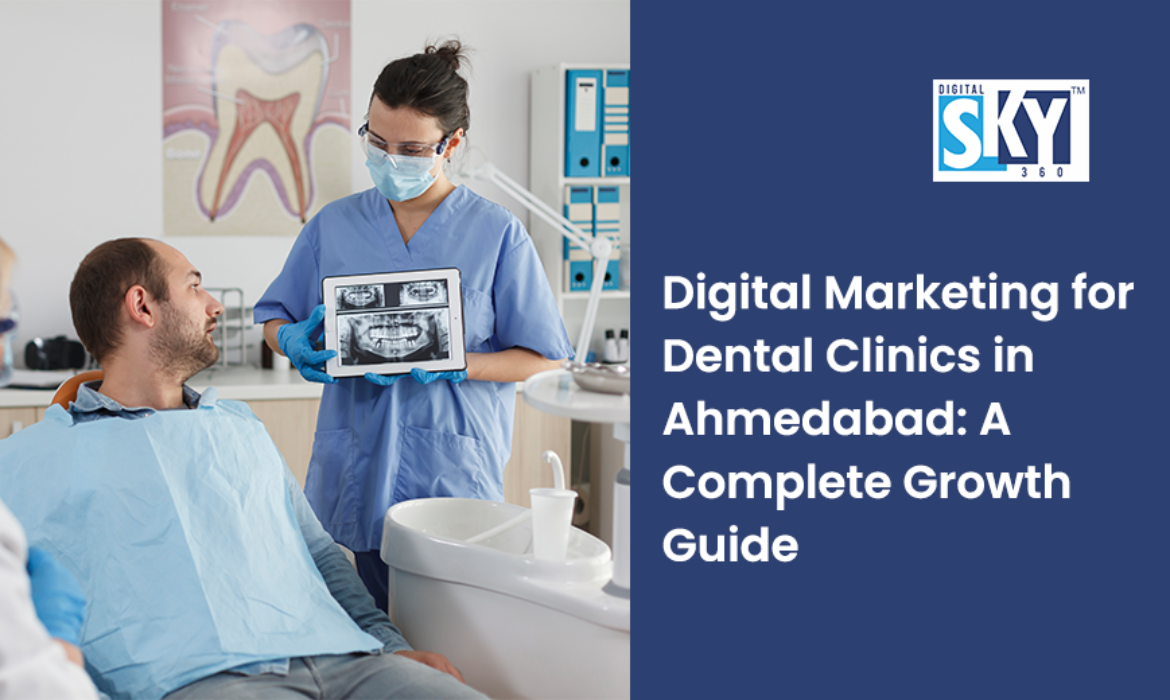
Digital Marketing for Dental Clinics in Ahmedabad: A Complete Growth Guide
Walk through any neighbourhood in Ahmedabad today — Satellite, Vastrapur, Bopal, Maninagar, Naranpura — and you’ll spot at least two or three dental clinics within a five-minute drive of each other. That’s good news for patients but tough news for clinic owners. The dentist with the best chair-side manner doesn’t always win anymore. The dentist who shows up first on Google, has glowing reviews, and answers a WhatsApp query within minutes usually does.
This is exactly why more dental practices in the city are turning to a digital marketing agency in Ahmedabad for dental clinics instead of relying on word-of-mouth referrals alone. Word-of-mouth still matters, but it’s no longer enough on its own. Here’s a practical, no-fluff look at what actually works for dental marketing in Ahmedabad in 2026.
Why Dental Clinics in Ahmedabad Need a Different Marketing Approach
Dentistry isn’t like selling a product online. People don’t casually browse for a root canal. They search when they’re in pain, anxious, or comparing options for a big-ticket treatment like implants or aligners. That changes the marketing playbook in three ways:
- Trust has to be built before the first appointment. A patient in Bodakdev searching for “best dentist near me” is going to click on the clinic that looks credible within the first three seconds — clear photos, real reviews, visible qualifications.
- Local intent drives almost every search. Very few people search “dentist India.” They search “dentist in Ahmedabad,” “dental clinic near Iscon,” or “teeth whitening Ahmedabad price.” This makes local SEO the backbone of any strategy.
- Decision cycles are short for emergencies, long for cosmetic work. A cracked tooth needs a same-day appointment. Invisalign or smile makeovers involve weeks of research. Your marketing needs to serve both timelines.
Google Business Profile: Your Most Important Digital Asset
If a dental clinic in Ahmedabad does only one thing this year, it should be optimising its Google Business Profile (GBP). This is the listing that shows up on Google Maps and in the local three-pack when someone searches for a nearby dentist.
A well-optimised profile includes:
- Accurate clinic name, address, and phone number (matching your website exactly)
- Categories like “Dental clinic,” “Cosmetic dentist,” or “Orthodontist,” depending on your services
- Real photos of the clinic, equipment, and team — not stock images
- Regular posts about offers, new services, or clinic updates
- A steady stream of fresh, genuine patient reviews
Reviews deserve special attention. A clinic with 40 reviews and a 4.8 rating will almost always outrank a clinic with 5 reviews, even if the second clinic has a nicer website. Ask happy patients for a review right after treatment, when the experience is still fresh — a simple WhatsApp message with a direct review link works better than any poster in the waiting room.
Local SEO for Long-Term, Compounding Traffic
Search engine optimization takes longer to show results than paid ads, but it keeps working long after you stop actively pushing it. For dental clinics, local SEO means:
- Location-specific pages if you have more than one branch (e.g., “Dental Clinic in Satellite” and “Dental Clinic in Vastrapur” as separate optimised pages)
- Service pages targeting real search terms: dental implants cost in Ahmedabad, root canal treatment, braces for adults, teeth whitening
- Blog content answering the questions patients actually type into Google, like “is teeth whitening safe” or “how painful is a root canal really”
- Consistent business listings across JustDial, Practo, Sulekha, and local directories
- Backlinks from Ahmedabad-based health directories, local news features, or partnerships with nearby diagnostic centres
Many clinics try to handle this in-house and give up after a few months because SEO doesn’t show instant results. Working with a proper SEO company in Ahmedabad that understands the healthcare space can shorten this learning curve significantly, since local ranking factors differ from general SEO work.
Paid Ads: Fast Visibility While SEO Builds Up
Google Ads and Meta Ads (Facebook/Instagram) fill the gap while organic rankings improve. For dental clinics, the highest-converting ad types are usually:
- Google Search Ads targeting high-intent keywords like “emergency dentist Ahmedabad” or “dental implants near me”
- Google Local Service Ads, where verified clinics appear at the very top with a “Google Guaranteed” badge
- Instagram and Facebook ads showing before-and-after smile transformations, which perform especially well for cosmetic dentistry and aligners
The trick is budget discipline. A dental clinic doesn’t need a massive ad spend — it needs tightly targeted campaigns aimed at a 5–8 km radius around the clinic, with clear call-to-action buttons like “Book Appointment” or “Chat on WhatsApp.”
Social Media: Building Trust Before the First Visit
Instagram has quietly become one of the biggest referral sources for dental clinics, especially for cosmetic treatments. Patients want to see real transformations, real doctors, and a real sense of what walking into your clinic feels like.
Content that consistently performs well:
- Before-and-after smile makeovers (with patient consent)
- Short reels explaining common procedures in simple language
- Behind-the-scenes clips of the clinic and sterilisation process (this genuinely reassures anxious patients)
- Quick myth-busting content — “Does whitening damage enamel?” type posts get shared often
WhatsApp: The Underrated Conversion Tool
Ahmedabad patients love WhatsApp for quick queries — pricing, appointment slots, or asking if a symptom needs urgent attention. Clinics that respond within minutes convert dramatically better than those that make people wait for a callback. Setting up a WhatsApp Business account with quick replies, appointment booking links, and automated greetings is a small effort with an outsized impact on conversions.
Why General Marketing Advice Doesn’t Work for Healthcare
A lot of generic digital marketing content applies to retail or e-commerce businesses, not healthcare. Dental marketing has its own compliance considerations, patient trust factors, and search behaviour patterns. This is one reason clinics increasingly look for agencies with specific experience in healthcare digital marketing rather than a general-purpose digital marketing agency that treats a dental clinic the same way it would treat a clothing brand or a real estate developer.
Interestingly, many of the same principles — building local trust, managing reviews, running location-based SEO — apply across other regulated or trust-heavy sectors too. Agencies that work with dental clinics often also support marketing for a digital marketing agency for hospital networks, and even unrelated fields like a digital marketing agency for a logistics company, because the core skill of turning local search intent into booked appointments transfers well. Similarly, techniques used for SEO for dermatologists or the strategies outlined in a cosmetic clinic organic traffic guide overlap heavily with what works for dental practices, since both deal with appearance-conscious, research-heavy patients.
Bringing It All Together
Digital marketing for dental clinics in Ahmedabad isn’t about doing everything at once. It’s about sequencing the right efforts: get the Google Business Profile right first, layer in local SEO for long-term traffic, use paid ads to fill short-term gaps, and keep social media and WhatsApp active for trust-building and quick conversions. Clinics that commit to this consistently for six to twelve months typically see a steady, compounding rise in appointment bookings — not an overnight spike, but a real, durable pipeline of new patients.
FAQs
1. How long does digital marketing take to show results for a dental clinic?
Paid ads can bring enquiries within days, but SEO and Google Business Profile improvements typically take 3–6 months to show strong, lasting results.
2. Is Instagram really useful for a dental clinic, or just for cosmetic dentists?
It helps both. Cosmetic and general dentistry benefit from reels and before-after content, since it builds trust before the first visit.
3. How many Google reviews does a dental clinic need to rank well locally?
There’s no fixed number, but clinics with 30+ recent, genuine reviews and a rating above 4.5 tend to consistently outrank competitors with fewer reviews.
4. Should a single dental clinic hire an agency, or can it be managed in-house?
Small clinics can manage basic social media in-house, but SEO and paid ads usually need professional handling to avoid wasted ad spend and slow results.
5. What’s the most cost-effective channel for a new dental clinic in Ahmedabad?
Google Business Profile optimisation is the most cost-effective starting point since it’s free and directly targets people actively searching nearby.

Digital Marketing for Logistics Companies in Gujarat: A Practical Growth Guide
Gujarat sits at the heart of India’s logistics network. With Mundra and Kandla among the busiest ports in the country, the Delhi-Mumbai Industrial Corridor cutting straight through the state, and a dense web of manufacturing hubs feeding constant freight demand, logistics companies here have no shortage of business opportunity. What many of them lack, though, is a digital presence that reflects the scale and reliability of their operations.
Walk through the transport and logistics sector in Ahmedabad, Rajkot, Surat, or Vadodara, and you’ll find fleets of trucks, warehousing capacity, and years of operational experience, sitting behind a barely-there website or no online presence at all. Meanwhile, shippers, manufacturers, and e-commerce companies looking for logistics partners are increasingly searching Google first, checking reviews, and comparing service pages before ever making a call.
This guide explains exactly how logistics companies in Gujarat can build a digital marketing strategy that turns their real operational strength into a steady stream of business inquiries.
Why Logistics Companies Can No Longer Rely on Referrals Alone
For decades, logistics was a relationship business built on referrals, personal networks, and long-standing contracts. That foundation still matters, but it’s no longer sufficient on its own. New businesses entering Gujarat’s manufacturing and export ecosystem don’t have those existing relationships, and they’re turning to Google, LinkedIn, and industry directories to find reliable transport and warehousing partners.
A logistics company without a strong digital footprint effectively excludes itself from this entire pool of new business, no matter how strong its actual fleet, warehousing, or service quality might be. Digital marketing here isn’t about flashy branding; it’s about making genuine operational capability visible to the people actively searching for it.
A Website That Reflects Operational Credibility
Your website is often a prospective client’s first impression of your reliability. For logistics companies, it needs to answer practical questions quickly:
- Service area coverage, including specific routes, ports, or regions served
- Fleet details, such as vehicle types, capacity, and specialised transport options (refrigerated, oversized cargo, etc.)
- Warehousing capabilities, including location, storage capacity, and handling facilities
- Tracking and technology features, if you offer shipment visibility tools
- Clear inquiry and quote request options, ideally with fast response commitments
A slow, outdated, or purely decorative website raises doubts about operational efficiency, even if your actual service quality is excellent. Buyers often assume that a company careless about its digital presence might be careless about shipment tracking or communication too.
SEO: Getting Found by Businesses That Need You Right Now
Search engine optimisation is particularly valuable for logistics companies because the searches involved often carry immediate, practical intent. Someone searching “transport company Ahmedabad to Mundra port” or “warehouse for rent Sanand” typically needs a solution soon, not eventually.
Effective SEO strategies for this sector include:
- Route and corridor-specific pages, targeting searches for common transport lanes
- Service-specific landing pages, separating full truckload, part-load, warehousing, and specialised cargo services
- Location-based optimisation for key industrial zones and ports across Gujarat
- Blog content addressing common shipper concerns, such as customs documentation, packaging standards, or freight cost factors
- Google Business Profile optimisation, since many logistics searches happen with local or regional intent
Because logistics SEO involves both broad transport terms and highly specific route or industry-based searches, working with a knowledgeable digital marketing agency in Ahmedabad helps ensure your content structure captures both types of search behaviour effectively.
Content That Builds Trust With Shippers
Logistics buyers, especially manufacturers and exporters, want reassurance around reliability, safety, and communication before committing to a transport partner. Content that builds this trust includes:
- Case studies detailing successful large-scale or time-sensitive shipments
- Articles explaining your safety protocols, insurance coverage, or compliance certifications
- Educational content around export documentation, customs processes, or packaging best practices
- Behind-the-scenes content showing your fleet, warehousing facilities, and operational team
This kind of clear, informative content also tends to perform well in AI-generated search overviews, since these tools favour factual, well-organised explanations over generic promotional copy.
Social Media: An Underused Opportunity in Logistics
Most logistics companies in Gujarat treat social media as unnecessary, assuming it belongs to consumer-facing industries. In reality, a well-run social presence builds brand recall among manufacturers, exporters, and warehousing clients who repeatedly need transport partners.
Effective content types include:
- Fleet and warehousing facility showcases
- Milestone posts, such as new route launches or fleet expansions
- Client testimonials and successful delivery stories
- Educational posts about logistics trends affecting Gujarat’s industrial corridors
Working with an experienced social media marketing company in Ahmedabad can help maintain consistent posting without pulling your operations team away from core logistics work.
Paid Advertising for Immediate Business Needs
While SEO builds long-term visibility, Google Ads can generate faster inquiries, particularly useful when expanding into a new route, launching a new warehousing facility, or entering a competitive market. Effective paid strategies include:
- Targeting specific route or corridor-based search terms
- Geo-targeted campaigns focused on Gujarat’s industrial zones
- Retargeting website visitors who requested a quote but didn’t finalise
- LinkedIn ads targeted at procurement or supply chain decision-makers
Tracking actual inquiries and conversions, not just clicks, is essential here, since logistics decision-makers often compare multiple providers before committing.
LinkedIn: Reaching Supply Chain Decision-Makers Directly
For B2B logistics companies, LinkedIn is often more valuable than consumer platforms. Supply chain managers, procurement heads, and export coordinators are active there, making it an effective channel for:
- Sharing capacity expansions or new service launches
- Publishing thought leadership on logistics trends affecting Gujarat’s industrial corridors
- Direct outreach to relevant decision-makers at target companies
- Building long-term brand recall among repeat B2B buyers
Learning From Other Growth-Focused Sectors in Gujarat
Interestingly, the fundamentals of turning offline operational strength into online visibility apply across very different industries. A Digital marketing agency for fintech focuses heavily on trust and compliance-driven messaging, while a Digital marketing agency for textile often emphasises visual storytelling and craftsmanship, and a Digital Marketing Agency for Restaurants in Ahmedabad leans into local discovery and reviews. Logistics marketing borrows a bit from each of these: the trust-building of financial services, the credibility-building of manufacturing, and the local search relevance of hospitality.
Choosing the Right Digital Marketing Partner
Not every marketing agency understands the operational realities of freight, warehousing, and supply chain communication. When evaluating a partner for Digital marketing for logistics company growth, look for one that demonstrates:
- Experience working with transport, warehousing, or supply chain clients
- A clear process across SEO, content, and paid advertising rather than vague promises
- Transparent reporting focused on genuine business inquiries, not just website traffic
- An understanding of both B2B decision-making cycles and local search behaviour
Final Thoughts
Gujarat’s logistics companies already have what matters most: operational capacity, route expertise, and years of reliable service. What’s often missing is simply making that reliability visible to the growing number of businesses searching for transport and warehousing partners online. A strong website, focused SEO, credible content, and targeted advertising can convert that operational strength into a steady, predictable pipeline of new business inquiries.
Frequently Asked Questions
1. Do logistics companies really need digital marketing if they rely on referrals?
Yes. Referrals still matter, but new businesses entering Gujarat’s industrial ecosystem often search online first, and a weak digital presence means missing that entire pool of potential clients.
2. What kind of SEO works best for logistics companies?
Route-specific, service-specific, and location-based SEO tends to work best, since logistics searches are often tied to particular corridors or industrial zones.
3. Is social media worth the effort for a B2B logistics company?
Yes, even in B2B logistics, consistent social media builds brand recall among manufacturers and exporters who repeatedly need transport or warehousing partners.
4. How fast can paid ads generate logistics inquiries?
Well-targeted Google or LinkedIn ads can start generating qualified inquiries within a few weeks, especially for specific routes or new service launches.
5. What’s the most overlooked digital marketing mistake in logistics?
Having an outdated or unclear website, which can make even a highly capable, reliable company appear inefficient to prospective clients.
Digital Marketing for NBFC & Fintech Companies in India: A Complete Growth Guide
India’s NBFC and fintech space has exploded over the last decade. From digital lending platforms to micro-finance NBFCs, insurance-tech startups, and neo-banking apps, the sector has moved faster than almost any other industry in the country. But with that growth has come intense competition, tightening RBI compliance requirements, and increasingly skeptical customers who’ve seen too many fly-by-night lending apps to trust blindly.
For NBFCs and fintech companies, digital marketing isn’t optional anymore; it’s the primary channel through which trust, compliance credibility, and customer acquisition all happen simultaneously. A borrower comparing loan apps, a business owner researching working capital options, or an investor evaluating a fintech partner will almost always start with a Google search, an app store review, or a quick scroll through social media before ever filling out a form.
This guide breaks down what actually works for NBFC and fintech digital marketing in India today, and why getting it right matters far more here than in most other industries.
Why Trust Is the Real Currency in Fintech Marketing
Unlike many industries where digital marketing is primarily about visibility, fintech marketing is fundamentally about trust. Money is involved, and Indian consumers have grown understandably cautious after widespread reports of predatory lending apps, data misuse, and hidden charges.
This means every piece of your digital presence, from your website copy to your app store reviews to your social media tone, either builds or erodes trust. A poorly explained interest rate, a confusing terms page, or an unanswered negative review can cost you far more customers than a mediocre ad creative ever will.
Successful NBFC and fintech marketing treats compliance and transparency as marketing assets, not just legal checkboxes.
Building a Website That Converts and Reassures
Your website often needs to do double duty: convert visitors into applicants while reassuring them that you’re a legitimate, RBI-compliant business. Key elements include:
- Clear RBI registration and compliance details displayed prominently, not buried in footers
- Transparent pricing and interest rate breakdowns with no hidden-fee ambiguity
- Simple, fast loan or product application flows optimised for mobile users
- Real customer testimonials and case studies, ideally with verifiable details
- Educational content explaining financial products in plain language
Speed matters enormously here too. Fintech customers are often making time-sensitive decisions, and a slow-loading application page can cause drop-offs before they even see your offer.
SEO: Capturing High-Intent Financial Searches
Search engine optimization for NBFCs and fintech companies is particularly valuable because the searches involved often carry strong buying intent. Someone searching “instant personal loan without collateral” or “best NBFC for business loans” is usually ready to act, not just browsing casually.
Effective SEO strategies for this sector include:
- Product and use-case specific pages, such as separate pages for personal loans, business loans, or gold loans
- Educational blog content around financial literacy, EMI calculations, and eligibility criteria
- Local and regional SEO for NBFCs operating in specific states or cities
- Structured data and calculators (EMI calculators, eligibility checkers) that improve engagement and rankings
- Regular content updates reflecting RBI guideline changes, since search engines favour current, accurate financial information
Because financial SEO falls under Google’s “Your Money or Your Life” (YMYL) content category, it demands higher accuracy and authority signals than most industries. Working with an experienced digital marketing agency in Ahmedabad or a specialised fintech SEO team helps ensure content meets these stricter quality standards while still ranking competitively.
Content Marketing: Educating Before Selling
Fintech customers, especially first-time borrowers or investors, often need education before they’re ready to convert. Content marketing bridges this gap effectively through:
- Simple explainer articles on credit scores, loan eligibility, or repayment structures
- Comparison content helping users understand different loan or investment products
- Video content breaking down complex financial concepts visually
- Regular updates on regulatory changes affecting borrowers or investors
This kind of clear, factual content also performs well in AI-generated search overviews, since these systems tend to favour well-structured, genuinely helpful explanations over promotional language.
Social Media: Balancing Engagement With Compliance
Social media works differently for NBFCs and fintechs compared to most industries, since every claim made publicly can carry regulatory implications. That said, done correctly, social media is powerful for:
- Building brand recall through consistent, educational content
- Sharing customer success stories and testimonials
- Responding transparently to public queries or complaints
- Announcing new products, partnerships, or funding milestones
The key difference from other sectors is that every post needs a compliance review layer before publishing, since misleading claims about interest rates or approval guarantees can attract regulatory scrutiny.
Paid Advertising: Precision Over Volume
Google Ads and social media advertising can generate fast application volume for NBFCs and fintechs, but precision matters far more than reach here. Effective paid strategies include:
- Targeting high-intent keywords tied to specific loan or financial products
- Retargeting website visitors who started but didn’t complete an application
- Lookalike audiences based on your best-performing existing customers
- Strict compliance review of all ad creatives and landing pages before launch
Because customer acquisition cost in fintech can be high, tracking the full funnel, from click to approved application, is essential to avoid wasting ad spend on low-quality leads.
App Store Optimisation for Fintech Apps
For fintech companies with mobile apps, app store visibility and ratings function almost like a second SEO channel. Optimising app titles, descriptions, and screenshots for relevant keywords, alongside actively managing user reviews and ratings, directly impacts both download volume and user trust before installation.
Learning From Other Trust-Driven and Regional Sectors
Interestingly, some of the trust-building strategies that work well for NBFCs and fintechs are borrowed from other industries where credibility is equally critical. For instance, SEO for dermatologists relies heavily on transparent, expertise-driven content to build patient trust, a principle fintech marketers can adapt directly. Similarly, studying how real estate social media agencies balance promotional content with genuine trust-building offers useful lessons, even though the products being sold are entirely different.
Choosing the Right Marketing Partner for Fintech
Not every digital marketing agency understands RBI compliance nuances, YMYL content standards, or the sensitivity required in financial messaging. When evaluating a Digital marketing agency for fintech, look for a partner that can demonstrate:
- Prior experience with regulated financial or lending clients
- A clear compliance review process for content and ad creatives
- Transparent reporting focused on qualified leads and approved applications, not just clicks
- Strong understanding of YMYL SEO requirements
Many NBFCs also work with broader agencies with cross-industry expertise. A capable seo company in Ahmedabad, for example, might bring experience spanning sectors like a Digital marketing agency for pharma & chemical or handling Digital marketing for logistics company in Gujarat, since the core discipline of building trust and driving qualified conversions transfers well across regulated, trust-sensitive industries.
Final Thoughts
India’s NBFC and fintech sector operates in a uniquely demanding space where growth and trust must be built simultaneously. A well-structured website, compliance-aware SEO, educational content, and carefully targeted advertising can turn a fintech’s genuine value proposition into a steady stream of qualified, trusting customers. In an industry where skepticism runs high, the companies that market with transparency, not just aggression, are the ones building lasting customer relationships.
Frequently Asked Questions
1. Why is digital marketing especially important for NBFCs and fintech companies?
Because customers are cautious with financial decisions, a strong, transparent online presence directly influences whether they trust and choose your platform.
2. What is YMYL content, and why does it matter for fintech SEO?
YMYL stands for “Your Money or Your Life,” a Google content category requiring higher accuracy and authority, which applies directly to financial and lending content.
3. Is social media marketing risky for regulated fintech companies?
It can be if claims aren’t compliance-reviewed, but done carefully, social media is highly effective for building brand trust and customer education.
4. How important are app store reviews for fintech companies?
Very important, since ratings and reviews often influence a user’s decision to download and trust a fintech app before ever using it.
5. What’s the biggest digital marketing mistake NBFCs make?
Overpromising in ads or content, such as guaranteed approvals or unrealistic rates, which damages trust and can attract regulatory attention.
Digital Marketing for Pharma & Chemical Companies in Gujarat: A Practical Growth Guide
Gujarat produces a massive share of India’s pharmaceutical and chemical output. Ankleshwar, Vapi, Dahej, and the pharma clusters around Ahmedabad aren’t just industrial zones; they’re the backbone of the country’s drug manufacturing, API production, and speciality chemical exports. Yet walk into most pharma or chemical companies here, and you’ll find the same pattern: world-class manufacturing capability, but a website that hasn’t been updated in years and almost no presence where modern buyers actually look for suppliers.
That gap is costing businesses real revenue. Procurement managers, regulatory buyers, distributors, and even hospital purchase teams now research a company online long before placing a call. If your pharma or chemical business isn’t showing up in that research phase, you’re losing deals to competitors who simply invested in visibility, not necessarily better products.
This guide walks through exactly how pharma and chemical companies in Gujarat can build a digital presence that generates genuine business inquiries, without compromising on the compliance-heavy, trust-driven nature of this industry.
Why This Industry Can’t Ignore Digital Marketing Anymore
Pharma and chemical buying decisions are rarely impulsive. They involve technical specifications, certifications, compliance documents, and long vetting cycles. Because of this, many companies assume digital marketing doesn’t apply to them the way it does to consumer brands. That assumption is outdated.
Buyers today start their vendor search on Google, check a company’s certifications page, look for case studies, and often view a company’s LinkedIn activity to judge credibility. A chemical manufacturer with an outdated website, missing safety data sheets, or no online presence at all raises silent red flags during vetting, even if the actual product quality is excellent.
Digital marketing, done correctly, doesn’t replace technical credibility; it makes that credibility visible and searchable.
A Website Built for Technical Buyers
Your website is often the first real interaction a buyer has with your company. For pharma and chemical businesses, it needs to do more than look professional; it needs to answer technical questions upfront.
Essential elements include:
- Product and molecule-specific pages with specifications, applications, and grades
- Downloadable documents such as MSDS, COA, and regulatory certifications
- Clear compliance signalling — GMP, WHO-GMP, ISO, USFDA, or relevant chemical safety certifications displayed prominently
- Fast-loading, mobile-friendly design, since many buyers check sites while travelling or between meetings
- A simple, direct inquiry system that doesn’t force buyers through unnecessary steps
A well-structured website reduces the back-and-forth emails asking for basic information, which speeds up your entire sales cycle.
SEO: Getting Found by the Right Buyers
Search engine optimization is one of the highest-return investments for pharma and chemical companies, simply because so few competitors are doing it well. When a distributor searches “API manufacturer Gujarat” or a hospital procurement team searches “pharmaceutical supplier Ahmedabad,” ranking on the first page puts you directly in front of ready buyers.
Effective SEO practices for this sector include:
- Molecule and product-level keyword targeting, rather than only broad industry terms
- Location-specific optimisation for Gujarat’s key industrial belts
- Technical blog content answering real buyer questions around formulations, applications, or regulatory changes
- Structured, crawlable product catalogues so search engines can index every product page correctly
- Google Business Profile optimisation for local visibility and map-based searches
Because pharma and chemical SEO involves technical accuracy and compliance sensitivity, many companies choose to work with a specialised digital marketing agency in Ahmedabad that understands both search algorithms and the regulatory tone this industry requires.
Content Marketing That Builds Scientific Trust
In this industry, content isn’t about entertainment; it’s about demonstrating expertise. Buyers want to see that you understand the science and compliance landscape as well as they do.
High-performing content types include:
- Detailed application notes explaining how a chemical or formulation is used in specific industries
- Regulatory update articles keeping buyers informed on compliance changes
- Case studies of successful long-term supply partnerships
- Whitepapers on manufacturing processes, quality control, or sustainability initiatives
This kind of content also tends to perform well in AI-driven search overviews, since these systems favour clear, factual, well-structured explanations over promotional language.
LinkedIn: The Real B2B Battlefield
For pharma and chemical companies, LinkedIn often matters more than Instagram or Facebook. Procurement managers, R&D heads, and distributors are active there, and a consistent LinkedIn presence builds long-term brand recall.
Strong LinkedIn strategies include:
- Sharing plant expansions, new product launches, or certification milestones
- Posting leadership insights on industry trends or regulatory shifts
- Employee-driven content showcasing R&D and quality control teams
- Thought leadership articles positioning your company as a knowledgeable partner, not just a vendor
Paid Advertising for Faster, Targeted Reach
While SEO and content build long-term authority, paid campaigns on Google and LinkedIn can accelerate lead generation, especially when launching a new product or entering a new export market. Effective paid strategies typically focus on:
- Specific technical search terms buyers actually use
- Geo-targeted campaigns for domestic or export regions
- Retargeting website visitors who viewed product pages but didn’t inquire
- LinkedIn ads targeted by job title, such as procurement or quality assurance roles
Running paid ads without proper conversion tracking is one of the most common ways companies waste budget in this sector, so setting up clear inquiry tracking from day one is essential.
Reputation and Trust Signals Online
Because pharma and chemical purchases carry regulatory and safety weight, online reputation matters more here than in many other industries. This includes managing Google reviews, responding professionally to any public queries, and ensuring your certifications and compliance information are easy to verify online. A single outdated or missing certification page can cause a buyer to move on to a competitor, even if your actual compliance record is excellent.
Learning From Adjacent Healthcare and Wellness Sectors
Interestingly, some of the most refined digital marketing strategies used by pharma and chemical companies are borrowed from adjacent, more consumer-facing healthcare sectors. Healthcare digital marketing has matured significantly around building trust through transparent, educational content, a lesson chemical and pharma manufacturers can apply directly. Similarly, examining a Cosmetic clinic organic traffic guide often reveals useful patterns around building credibility-driven organic traffic, even though the end customer is completely different.
Choosing the Right Marketing Partner
Not every marketing agency understands GMP standards, chemical nomenclature, or the compliance sensitivities of pharma communication. When evaluating a Digital marketing agency for pharma & chemical companies, look for a partner that demonstrates:
- Experience working with regulated, technical industries
- A clear, transparent process across SEO, content, and paid campaigns
- Reporting focused on qualified leads and inquiries, not just traffic numbers
- An understanding of long B2B sales cycles rather than quick-conversion tactics
Many businesses in Gujarat also benefit from working with a broader seo company in Ahmedabad that has cross-industry experience, sometimes with backgrounds spanning a Digital marketing agency for textile or working as a performance marketing agency in Ahmedabad, since the underlying skill of turning offline credibility into online visibility applies across sectors.
Final Thoughts
Gujarat’s pharma and chemical companies already have the hardest part solved: real manufacturing capability, technical expertise, and regulatory compliance. What’s often missing is simply making that expertise visible to the buyers actively searching for it online. A well-built website, focused SEO, credible content, and targeted advertising can turn years of manufacturing excellence into a steady stream of qualified inquiries, without ever compromising the technical, trust-first nature of this industry.
Frequently Asked Questions
1. Is digital marketing really necessary for B2B pharma and chemical companies?
Yes. Buyers increasingly research suppliers online before making contact, so an outdated or missing digital presence can quietly cost you deals.
2. How is pharma SEO different from regular SEO?
Pharma and chemical SEO requires technical accuracy, compliance-sensitive language, and product or molecule-level keyword targeting rather than generic terms.
3. Which platform works best for B2B pharma marketing, LinkedIn or Instagram?
LinkedIn typically performs better for this industry since procurement and technical decision-makers are more active there than on visual platforms.
4. How long does it take to see results from SEO in this sector?
Most companies start seeing meaningful organic inquiries within 4 to 6 months, depending on competition and how technically detailed the website content is.
5. Can paid ads work for a long B2B sales cycle like pharma procurement?
Yes, especially when combined with retargeting and lead nurturing, since ads can keep your brand visible throughout a buyer’s longer decision-making process.

Digital Marketing for Textile & Garment Businesses in Ahmedabad: A Complete Growth Guide
Ahmedabad has been the beating heart of India’s textile industry for well over a century. From the mills of Manchester of the East to today’s export houses in Naroda, Narol, and Vatva, the city still runs on fabric, thread, and craftsmanship. But here’s the truth that many textile and garment manufacturers, wholesalers, and exporters are slowly waking up to: being good at making cloth is no longer enough. Buyers, whether they’re a boutique owner in Mumbai or a sourcing manager in Germany, are searching online before they ever pick up the phone.
If your business isn’t visible on Google, Instagram, or WhatsApp Business, you’re invisible to a large chunk of your potential customers. This guide breaks down exactly how textile and garment businesses in Ahmedabad can use digital marketing to get more inquiries, more export leads, and more repeat buyers, without losing the personal touch that has always defined this industry.
Why Ahmedabad’s Textile Sector Needs Digital Marketing Now
The textile trade in Ahmedabad has traditionally relied on trade fairs, referrals, and long-standing relationships. That foundation still matters. But B2B buying behaviour has changed everywhere, including in traditional industries like textiles. Buyers now Google suppliers, check their websites, look at reviews, and browse Instagram pages before placing an order or even requesting a sample.
For a fabric manufacturer, garment exporter, or wholesale trader in Ahmedabad, this shift creates a huge opportunity. The competition online is still relatively thin compared to more digitally mature industries, which means businesses that invest early in digital marketing can capture disproportionate market share, both locally and internationally.
Building a Website That Actually Sells
Your website is your digital showroom. Many textile businesses in Ahmedabad still operate with outdated, slow, or purely informational websites that don’t convert visitors into leads. A modern textile website needs:
- High-quality product photography showing fabric texture, weave, and colour accuracy
- Clear categorisation by fabric type, GSM, end-use, or garment category
- Fast loading speed, since buyers checking on mobile networks abroad won’t wait
- Simple inquiry forms and a visible WhatsApp or call-to-action button
- Export-specific pages if you deal in international trade, covering MOQs, certifications, and shipping terms
A well-built website also forms the backbone of everything else you do online, since your ads, social media, and search rankings will all eventually point back to it.
Search Engine Optimisation (SEO) for Textile Businesses
SEO is how your business shows up when someone searches “cotton fabric supplier Ahmedabad” or “garment manufacturer for private label India.” Ranking on the first page of Google isn’t luck; it comes from consistent, technically sound optimisation.
Key SEO practices that work well for this sector include:
- Location-based keywords — targeting searches like “textile manufacturer in Ahmedabad” or “garment exporter Gujarat”
- Product-specific pages — a dedicated page for each fabric type or garment category ranks better than one generic page
- Blog content answering real buyer questions, such as fabric care, sourcing tips, or industry trends
- Technical SEO — mobile-friendliness, structured data, and clean site architecture
- Google Business Profile optimisation, especially important for local B2B searches and walk-in wholesale buyers
Many businesses attempt SEO on their own but see limited results because of inconsistent effort. This is where working with an experienced seo company in Ahmedabad can make a measurable difference, since local SEO specialists understand both the technical side and the regional buyer search behaviour.
Social Media: Where Buyers Discover Your Craftsmanship
Instagram and Facebook have become unexpectedly powerful tools for textile and garment brands. Visual platforms are perfectly suited to showcase fabric quality, garment finishing, and behind-the-scenes production processes that build trust with buyers who can’t physically visit your unit.
Effective social strategies for this industry include:
- Reels showing the weaving, dyeing, printing, or stitching process
- Before-and-after transformations of raw fabric into finished garments
- Customer and retailer testimonials
- New collection launches with clear pricing or inquiry prompts
- Behind-the-scenes content that humanises your factory and team
Consistency matters more than perfection here. A business posting three times a week with genuine, unpolished factory footage often outperforms one posting rarely with overly staged content. If managing this in-house feels overwhelming, partnering with a Social media marketing agency in Ahmedabad can help maintain a steady content calendar while keeping messaging aligned with your brand and buyer profile.
Paid Advertising: Faster Results When Done Right
While SEO and social media build long-term visibility, paid advertising through Google Ads and Meta Ads can generate inquiries much faster. For textile businesses, this usually works best when targeting:
- Specific buyer intent keywords (“bulk fabric supplier,” “private label garment manufacturer”)
- Geographic regions relevant to your export or domestic markets
- Retargeting website visitors who didn’t inquire on their first visit
- Lookalike audiences based on your existing best customers
Paid ads require careful budget control and ongoing optimisation. Running them without proper tracking often wastes money on clicks that never convert into genuine buyer inquiries, so testing small budgets first and scaling what works is the safer approach.
WhatsApp and Email: The Underrated Closers
In the textile trade, deals are often closed over WhatsApp, not contact forms. Setting up WhatsApp Business with a catalogue, quick reply templates, and automated greetings can significantly speed up buyer response times. Similarly, email marketing remains effective for B2B textile businesses, particularly for:
- Sending seasonal catalogues to existing buyers
- Announcing new fabric arrivals or garment collections
- Nurturing export leads who need more time to decide
- Sharing certifications, compliance documents, or factory audit reports
These channels feel less “digital marketing” and more like relationship management, but they are absolutely part of a complete strategy.
Content That Builds Authority
Buyers, especially international ones, want to know they’re dealing with a credible, established business. Publishing content around your manufacturing capacity, quality certifications, sustainability practices, and export experience builds this trust over time. Case studies of successful bulk orders or long-term retail partnerships work particularly well as trust signals for new prospects researching your business online.
Choosing the Right Digital Marketing Partner
Not every marketing agency understands the nuances of textile and garment businesses, such as seasonal buying cycles, B2B versus B2C messaging, or export documentation expectations. When evaluating a Digital marketing agency for textile businesses, look for one that can show:
- Prior experience with manufacturing or trade-based clients
- A clear process for SEO, social media, and paid ads rather than vague promises
- Transparent reporting on leads generated, not just vanity metrics like likes or impressions
- Understanding of both domestic wholesale and export buyer behaviour
Interestingly, many of the same digital marketing principles apply across other traditional Ahmedabad-based industries too. A digital marketing agency in Ahmedabad working with sectors like Digital marketing agency for pharma, Real estate SEO Ahmedabad, or CNC manufacturing digital marketing often brings valuable cross-industry insight, since the core challenge, translating offline trust into online visibility, remains the same everywhere.
Final Thoughts
Ahmedabad’s textile and garment businesses have decades of manufacturing expertise behind them. The missing piece for many is simply visibility in the places where modern buyers actually search, compare, and decide. A thoughtful combination of a strong website, consistent SEO, engaging social content, targeted ads, and responsive communication on WhatsApp and email can transform inquiry volume within a few months.
Digital marketing isn’t replacing the relationship-driven nature of the textile trade; it’s simply giving that trade a bigger, faster stage to be discovered.
Frequently Asked Questions
1. How long does SEO take to show results for a textile business?
Most textile businesses start seeing meaningful ranking improvements and organic inquiries within 3 to 6 months of consistent SEO effort, depending on competition and website quality.
2. Is social media really useful for a B2B textile business?
Yes. Even B2B buyers browse Instagram and Facebook to verify a supplier’s credibility, production quality, and professionalism before reaching out.
3. Should garment exporters focus more on SEO or paid ads?
A combination works best. SEO builds long-term, low-cost visibility, while paid ads generate faster inquiries for specific product launches or seasonal demand.
4. What is the biggest digital marketing mistake textile businesses make?
Inconsistency. Many businesses launch a website or social page, post a few times, and then stop, which prevents any strategy from gaining momentum.
5. Can digital marketing help with export inquiries specifically?
Yes, through export-focused website pages, international SEO keywords, LinkedIn outreach, and Google Ads targeted at specific countries or regions.
How to Track ROI From Digital Marketing in India
Every business owner has asked this question at least once: “I’m spending money on marketing, but is it actually working?” It’s a fair question, and honestly, most businesses in India can’t answer it with real numbers. They know their monthly ad spend, they know roughly how many “likes” or “followers” they’ve gained, but when it comes to actual returns, it’s mostly guesswork.
Learning how to properly track ROI from digital marketing changes that. It turns vague feelings like “social media seems to be working” into clear numbers you can defend, adjust, and grow with confidence. In this guide, we’ll walk through the exact formulas, explained simply, so you can calculate your real returns without needing a finance degree.
Why Most Indian Businesses Struggle With This
The confusion usually isn’t about math — it’s about knowing what to actually measure. Many business owners track vanity metrics (likes, followers, impressions) instead of business metrics (leads, sales, revenue). Vanity metrics feel good, but they rarely tell you whether your money is being spent well.
This confusion is one of the biggest reasons digital marketing budgets fail — not because marketing doesn’t work, but because businesses can’t clearly see which part of their spend is actually generating results, so money keeps flowing into channels that look active but aren’t necessarily profitable.
The Foundation: What ROI Actually Means
ROI, or Return on Investment, is simply a way of comparing what you spent against what you earned back. The basic formula looks like this:
ROI = (Revenue from Marketing − Marketing Cost) ÷ Marketing Cost × 100
For example, if you spent ₹50,000 on a campaign and it generated ₹2,00,000 in revenue:
ROI = (₹2,00,000 − ₹50,000) ÷ ₹50,000 × 100 = 300%
This means for every rupee spent, you earned back three rupees in profit on top of your investment. Simple in theory — but the real challenge is knowing exactly how much revenue came from which channel, which is where most businesses get stuck.
Setting Up the Right Tracking First
Before any formula becomes useful, you need accurate data flowing in. This is exactly why a proper Google Analytics 4 setup guide is worth following closely — without correctly tracking form submissions, calls, WhatsApp clicks, and purchases, you simply won’t have reliable numbers to calculate ROI from in the first place. Garbage data in means garbage ROI numbers out, no matter how correct your formula is.
Key Formulas Every Indian Business Should Know
1. Customer Acquisition Cost (CAC)
This tells you how much it costs, on average, to acquire one new customer.
CAC = Total Marketing Spend ÷ Number of New Customers Acquired
Example: If you spent ₹1,00,000 in a month and gained 50 new customers:
CAC = ₹1,00,000 ÷ 50 = ₹2,000 per customer
If your average customer only spends ₹1,500 with you, that’s a warning sign — you’re spending more to acquire customers than they’re currently worth.
2. Return on Ad Spend (ROAS)
This is especially useful for paid campaigns like Google Ads or Meta Ads.
ROAS = Revenue From Ads ÷ Amount Spent on Ads
Example: You spent ₹20,000 on Facebook ads and it generated ₹1,00,000 in sales:
ROAS = ₹1,00,000 ÷ ₹20,000 = 5
This means you earned ₹5 for every ₹1 spent. A healthy ROAS varies by industry, but generally, anything above 3-4x is considered solid for most small and mid-sized Indian businesses.
3. Customer Lifetime Value (CLV)
This shows the total value a customer brings over their entire relationship with your business, not just their first purchase.
CLV = Average Purchase Value × Purchase Frequency × Average Customer Lifespan
Example: A customer spends ₹1,000 on average, purchases 4 times a year, and stays with your brand for 3 years:
CLV = ₹1,000 × 4 × 3 = ₹12,000
Comparing CLV against CAC tells you the real long-term health of your marketing. If your CAC is ₹2,000 but your CLV is ₹12,000, your marketing is actually working well, even if the first purchase alone looked unprofitable.
4. Conversion Rate
This tells you what percentage of visitors actually take the action you want, like filling a form or making a purchase.
Conversion Rate = (Number of Conversions ÷ Total Visitors) × 100
Example: 5,000 people visited your website and 100 filled out an enquiry form:
Conversion Rate = (100 ÷ 5,000) × 100 = 2%
This number becomes your benchmark. If a future campaign brings more traffic but the conversion rate drops, it usually signals a targeting or messaging problem rather than a traffic problem.
Together, understanding CAC and ROAS metrics India businesses generate gives you a much clearer, more honest picture than simply looking at follower counts or engagement numbers alone.
Putting It All Together: A Simple Monthly ROI Check
Here’s a practical way to review your ROI every month without getting overwhelmed by spreadsheets:
- Pull your total marketing spend for the month (across ads, agency fees, content costs).
- Pull total revenue directly attributable to marketing efforts (through GA4 tracking, coupon codes, or lead source tagging).
- Calculate ROI using the main formula above.
- Break it down by channel — how much did Google Ads contribute versus Instagram versus SEO?
- Compare this month’s numbers against last month’s to spot trends, not just single snapshots.
This monthly habit alone puts most businesses ahead of competitors who are still measuring success by likes and comments.
How to Actually Measure ROI in Practice, Not Just Theory
Formulas are only half the picture. To genuinely measure ROI in digital marketing, you need consistent tagging and tracking across every channel:
- Use UTM parameters on every link you share, so you know exactly which post, email, or ad brought a visitor
- Set up call tracking if phone enquiries are a major part of your sales process
- Track WhatsApp and form submissions as key events in your analytics
- Tag coupon codes or discount codes by channel to trace offline conversions back to specific campaigns
Without this level of tracking discipline, ROI calculations become rough estimates rather than reliable numbers you can act on.
Common Mistakes Businesses Make While Calculating ROI
- Only counting ad spend, ignoring agency or content production costs — this inflates ROI artificially
- Attributing all sales to the last channel touched, ignoring the earlier channels that built trust along the way
- Comparing ROI across very different channels unfairly — SEO, for instance, takes longer to show ROI than paid ads, so patience matters
- Not revisiting numbers regularly — a single good month doesn’t confirm a channel is reliable long-term
When to Bring In Professional Support
Tracking, calculating, and interpreting these numbers accurately takes time and some technical setup. If this feels like too much alongside running daily operations, professional help can make a real difference. A social media marketing agency in Ahmedabad can ensure your social campaigns are properly tagged and measured against real business outcomes, not just engagement. If organic search is a growing part of your strategy, working with an experienced seo company in Ahmedabad helps you understand SEO’s slower but compounding ROI over time. And for businesses wanting everything — ads, SEO, content, and analytics — working together under one clear reporting system, a full-service digital marketing agency in Ahmedabad can bring structure and clarity to your entire marketing spend.
Final Thoughts
ROI tracking isn’t about complicated finance jargon — it’s simply about connecting what you spend to what you earn, channel by channel. Once you start applying these formulas consistently, marketing stops feeling like a leap of faith and starts becoming a decision you can make confidently, backed by real numbers.
FAQs
1. What is a good ROI percentage for digital marketing in India?
It varies by industry, but many businesses aim for at least 200-300% ROI, meaning they earn back two to three times what they spend.
2. How is ROAS different from ROI?
ROAS only measures revenue against ad spend specifically, while ROI accounts for total marketing costs including content, tools, and agency fees.
3. Can small businesses calculate ROI without expensive software?
Yes. Basic tracking through Google Analytics 4, UTM links, and a simple spreadsheet is enough for most small and mid-sized businesses to start.
4. Why does my CAC seem high even though sales are increasing?
Rising CAC alongside rising sales can still be healthy if your customer lifetime value is high enough to justify the acquisition cost.
5. How often should I calculate marketing ROI?
Monthly reviews work well for most businesses, though larger campaigns may benefit from tracking ROI weekly during active promotional periods.
Google Analytics 4 Setup Guide for Indian Businesses
If you’ve logged into Google Analytics recently and felt completely lost compared to the old version, you’re not alone. Universal Analytics is gone, and Google Analytics 4 (GA4) works quite differently — different reports, different terminology, different way of tracking user behavior. For many Indian business owners, this switch has left analytics dashboards sitting unused, which means important decisions are being made on gut feeling instead of real data.
This Google Analytics 4 setup guide is written specifically to walk you through setting things up correctly from scratch, in plain language, without assuming you’re already a data expert.
Why GA4 Matters More Than Most Businesses Realize
A lot of business owners think of analytics as something only large companies or tech teams need. In reality, GA4 is one of the simplest ways to answer questions every business owner actually cares about:
- Where are my website visitors actually coming from?
- Which pages are people leaving from without taking action?
- Are people filling out my contact form, or just browsing?
- Is my Instagram traffic converting better than my Google Ads traffic?
Without proper tracking, most businesses genuinely can’t answer these questions with confidence — they’re guessing. And guessing is one of the quiet reasons digital marketing budgets fail, because money keeps getting spent on channels that look active but aren’t actually converting.
GA4 vs the Old Universal Analytics: The Key Difference
The biggest shift with GA4 is that it tracks everything as an “event” rather than sessions and pageviews the old way. A button click, a form submission, a scroll, a video play — all of these are events now. This sounds technical, but it actually makes tracking more flexible once it’s set up correctly, because you can measure the exact actions that matter to your business, not just how many people visited a page.
Step-by-Step: Setting Up GA4 for Your Business
Step 1: Create Your GA4 Property
Log into your Google Analytics account (or create one if you don’t have it yet) at analytics.google.com. Click “Admin,” then “Create Property.” Enter your business name, select your time zone (make sure it’s set to India Standard Time), and choose your currency as INR if you’re tracking e-commerce.
Step 2: Set Up a Data Stream
Once your property is created, you’ll need to add a “data stream” — this is essentially telling GA4 which website or app to track. Choose “Web,” enter your website URL, and give the stream a clear name like “Main Website.”
Step 3: Install the Tracking Code
GA4 will generate a small piece of code (your Measurement ID, starting with “G-“). This needs to be added to your website, either directly in the site’s code or through Google Tag Manager, which is the recommended method since it makes future tracking changes much easier without touching the website code every time.
Step 4: Set Up Google Tag Manager (Recommended)
If you don’t already use Google Tag Manager, it’s worth setting up alongside GA4. It acts as a middleman that lets you add and manage tracking tags — including GA4, Facebook Pixel, and conversion tracking — without needing a developer every single time you want to track something new.
Step 5: Define Your Key Events (Conversions)
This is the step most businesses skip, and it’s the most important one. Decide what actually matters for your business — form submissions, WhatsApp button clicks, phone number clicks, “Add to Cart,” or newsletter signups — and set these up as tracked events in GA4. Then mark the most important ones as “key events” (GA4’s version of conversions) so they show up clearly in your reports.
Step 6: Link Google Ads and Search Console
If you’re running Google Ads, link your Ads account to GA4 so you can see which campaigns are actually driving results, not just clicks. Similarly, linking Google Search Console gives you visibility into which search queries are bringing organic traffic to your site — useful data whether you’re managing SEO yourself or working with a seo company in Ahmedabad.
Step 7: Set Up Basic Reports and Dashboards
GA4 comes with default reports, but it’s worth customizing a simple dashboard showing traffic sources, key events, and top-performing pages — the metrics you’ll actually check weekly, rather than getting lost in every available report.
Step 8: Test Everything Before Trusting the Data
Use GA4’s “DebugView” or a browser extension like Google Tag Assistant to confirm your events are firing correctly. It’s common for businesses to assume tracking is working, only to discover months later that a form submission was never actually being recorded.
Common Mistakes Indian Businesses Make With GA4
- Never setting up key events — without this, GA4 only shows traffic numbers, not actual business outcomes.
- Ignoring mobile tracking — since a huge share of Indian traffic comes from mobile, make sure mobile-specific behavior (like click-to-call or WhatsApp buttons) is properly tracked.
- Not linking Search Console and Ads — this leaves valuable cross-platform data disconnected.
- Checking data once and never again — analytics only becomes useful when reviewed regularly, ideally weekly or monthly.
- Focusing only on traffic numbers — high visitor counts mean little if nobody takes action once they land on the site.
Going Beyond Basic Traffic Numbers
Once your GA4 setup is solid, the real value comes from using it to actually understand your marketing performance rather than just admiring visitor counts. This is where many businesses realize they need to look at SEO metrics beyond rankings — things like how long visitors stay, which pages lead to actual enquiries, and where people drop off before converting. Rankings alone don’t pay bills; visitor behavior and conversions do.
Similarly, GA4 becomes the backbone of your ability to track ROI from digital marketing. Instead of wondering whether your ad spend, SEO efforts, or social media activity are actually working, you can see, in numbers, exactly which channel brought in the enquiry or sale — and adjust your budget accordingly.
When to Bring In Professional Help
Setting up GA4 correctly, connecting it to Ads and Search Console, and defining the right key events takes some technical understanding. If this feels overwhelming alongside running your business, it’s worth bringing in outside help. A social media marketing agency in Ahmedabad can ensure your social campaigns are properly tracked and tied back to real business outcomes. For a broader, connected approach — where analytics, SEO, and paid campaigns all work together and report back accurately — partnering with an established digital marketing agency in Ahmedabad can save significant time and prevent costly tracking gaps.
Final Thoughts
GA4 might feel unfamiliar at first, especially if you were comfortable with the old Universal Analytics interface. But once it’s set up properly — with the right events, the right linked accounts, and a simple dashboard you’ll actually check — it becomes one of the most valuable tools for understanding what’s really working in your marketing. Take the time to set it up correctly once, and it will keep paying off in clearer decisions for months to come.
FAQs
1. Is Google Analytics 4 free to use?
Yes, GA4 is completely free for standard business use. Paid versions exist for large enterprises with advanced data needs, but most Indian businesses never need to upgrade.
2. How long does it take to properly set up GA4?
Basic setup can take under an hour, but properly configuring key events, Tag Manager, and linked accounts usually takes half a day if done carefully.
3. Do I need a developer to install GA4 on my website?
Not necessarily. Using Google Tag Manager, most businesses can add and manage tracking without ongoing developer help, though initial setup may need some technical support.
4. What’s the difference between GA4 events and key events?
Events track any user action (clicks, scrolls, form fills), while key events are the specific events you’ve marked as important business outcomes, like a form submission or purchase.
5. Can GA4 track WhatsApp or phone call clicks?
Yes, with proper setup through Google Tag Manager, click-to-call and WhatsApp button clicks can be tracked as events, which is especially useful for Indian businesses relying heavily on these channels.
Content Repurposing Strategy: How to Turn 1 Idea Into 10 Pieces of Content
Most businesses burn out on content not because they run out of ideas, but because they think every post needs to be brand new. You write a blog, post it once, and move on. You film a video, share it once, and forget about it. Meanwhile, your competitors are squeezing five, six, even ten pieces of content out of a single idea.
This is exactly what a good content repurposing strategy does. It’s not about being lazy or cutting corners — it’s about respecting the effort that went into your original content and making sure it actually reaches people, in the format they prefer, on the platform they scroll through most.
In this guide, we’ll show you exactly how to take one solid piece of content and turn it into ten different assets, without sounding repetitive or robotic.
Why Most Businesses Are Wasting Their Content
Here’s a pattern we see constantly: a business spends three hours writing a genuinely useful blog post. It gets posted to the website, shared once on Instagram, and then… nothing. That blog, packed with real value, quietly disappears into the archive.
The problem isn’t the content. It’s the distribution. A single format, posted once, on one platform, can never reach the full width of your audience — because different people consume content differently. Some read blogs. Some only watch reels. Some skim carousels. Some listen while driving. If your content marketing strategy only accounts for one format, you’re leaving most of your audience untouched.
Repurposing fixes this. It stretches the value of every idea across formats and platforms, multiplying your reach without multiplying your workload.
The Mindset Shift: One Idea, Many Formats
Before we get to the ten pieces, here’s the mental shift that makes repurposing actually work: stop thinking of content as single posts. Start thinking of it as one core idea that simply changes clothes depending on where it’s going.
A single client testimonial, for example, isn’t just “one post.” It’s a story that can become a video, a quote graphic, a caption, a case study, and more — all from the same raw material.
10 Pieces of Content You Can Create From One Core Idea
Let’s say your core piece is a blog post titled “5 Mistakes Businesses Make With Their Marketing Budget.” Here’s how that single idea can multiply:
1. The Original Blog Post
This remains your anchor — a detailed, SEO-optimized piece on your website that captures search traffic over time.
2. A LinkedIn Article or Post
Rewrite the core message in a more personal, first-person tone. LinkedIn audiences respond well to lessons and mistakes shared honestly, especially from founders or marketers.
3. An Instagram Carousel
Break the five mistakes into five simple slides, one point per slide, with a strong hook on the first slide and a call-to-action on the last.
4. A Short-Form Video (Reel/Short)
Pick just one mistake — the most surprising one — and turn it into a 30-45 second video. This works far better than trying to cram all five points into one clip.
5. A Quote Graphic
Extract the sharpest, most quotable line from the blog and turn it into a simple, branded graphic for Instagram or Pinterest.
6. An Email Newsletter Section
Summarize the blog in three or four lines and link back to the full post. This keeps your subscriber list engaged without demanding a full new write-up.
7. A Podcast Talking Point
If you’re already exploring podcast marketing, this same topic can become a 10-minute segment where you speak more casually about each mistake, adding personal anecdotes the blog didn’t include.
8. A Twitter/X Thread
Turn the five points into a numbered thread, each tweet building curiosity for the next, ending with a link to the full blog.
9. A WhatsApp Broadcast Message
For businesses using WhatsApp Business for customer communication, a short, friendly version of the tip can be shared directly, especially useful for B2B or service-based businesses.
10. A Slide Deck or PDF Lead Magnet
Turn the blog into a downloadable one-pager or short PDF guide that you offer in exchange for an email signup — instantly turning old content into a new lead-generation tool.
Notice something important here: none of these ten pieces are just copy-pasted. Each one is reshaped for how people actually consume that specific platform.
How to Build Repurposing Into Your Regular Workflow
Repurposing works best when it’s planned, not squeezed in as an afterthought. Here’s how to make it systematic:
Start with your calendar. If you already use a structured content calendar for Indian businesses, add a repurposing column next to every core content idea. This forces you to think about distribution the moment you plan the content, not after.
Batch your repurposing. Instead of repurposing piece by piece as the week goes on, set aside two hours once a week to convert your top-performing content from the previous week into three or four new formats.
Track what performs best. Not every format will work equally well for your audience. Some businesses find carousels outperform reels; others find the opposite. Let performance data guide which formats you prioritize repurposing into.
Keep a swipe file. Save your best-performing hooks, captions, and quotes in one document. When repurposing new content, you’ll often reuse structures that already proved successful.
Common Mistakes to Avoid
- Repurposing word-for-word — copying the same caption across platforms feels lazy and reduces engagement. Each platform needs its own tone.
- Repurposing too much, too fast — flooding every platform with the same idea in one day can feel spammy. Spread it out over one to two weeks.
- Ignoring platform-specific formats — a great LinkedIn post rarely works unchanged as an Instagram Reel script.
- Only repurposing blogs into social posts — don’t forget podcasts, emails, and PDFs as valuable repurposing directions too.
Why This Matters More for Indian Businesses
Indian audiences are spread across a wide mix of platforms — Instagram, YouTube, LinkedIn, WhatsApp, and Google Search all play a role in the buyer’s journey. A single format simply can’t cover this range. Repurposing ensures your core message — whether it’s a festival offer, a customer story, or an educational tip — reaches your audience wherever they happen to be scrolling that day.
It also solves a very real, very Indian business problem: limited time and limited content teams. Instead of creating ten separate ideas every week, repurposing lets a small team produce ten pieces of content from just one solid idea, saving both time and creative energy.
Getting Expert Help
If building and executing a repurposing system feels like too much on top of running your business, it’s worth bringing in outside expertise. A skilled social media marketing agency in Ahmedabad can handle the planning and creation across platforms for you. If you also want your content connected to stronger search visibility, working alongside an experienced seo company in Ahmedabad ensures your repurposed blogs and pages actually rank well over time. And for a complete, joined-up approach across content, ads, and SEO together, a full-service digital marketing agency in Ahmedabad can bring everything under one strategy.
Final Thoughts
You don’t need ten new ideas every week to stay consistent. You need one good idea, reshaped ten different ways. Once you build repurposing into your regular process, content creation stops feeling exhausting — and your best ideas finally get the reach they deserve.
FAQs
1. What is a content repurposing strategy?
It’s the process of taking one piece of content and reshaping it into multiple formats for different platforms, instead of creating fresh content from scratch every time.
2. How many pieces of content can one blog post really generate?
With planning, a single blog can realistically be turned into eight to ten different assets across social media, email, and video.
3. Does repurposed content perform as well as original content?
Yes, often better, since it’s tailored to each platform’s format rather than being a generic, one-size-fits-all post.
4. How much time does repurposing actually save?
Most businesses report saving several hours a week once repurposing becomes a regular part of their content workflow.
5. Is repurposing only useful for blogs?
No. Videos, podcasts, testimonials, and even customer emails can all be repurposed into multiple content formats.